Torch-down has long been used on low-slope roofs in wet climates, particularly on additions, porches and small commercial buildings. The seams are the part to watch. Call the number on this page to be connected with a local roofing contractor in Kent.
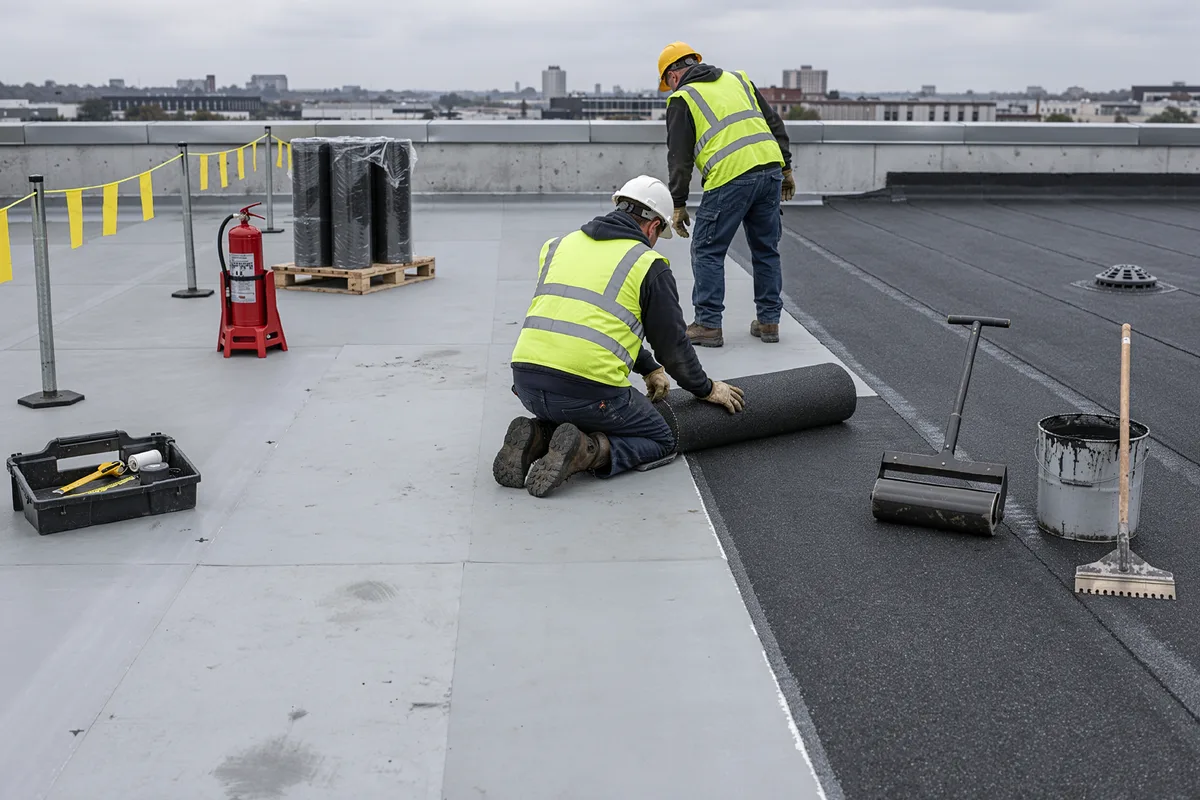
Why wet-climate roofers still use it
Modified bitumen is tough, handles foot traffic and repairs well. Its overlapped, fused seams cope with long wet seasons better than many thin coverings. That record is why torch-down remains common on low slopes across the region. Ask the roofer how it compares with other options for your building.
Fire safety in a wet-weather region
Damp days may seem to lower the risk, but hidden gaps and dry attic framing still burn. Roofers may delay torch work in wind or on a wet surface for safety and for a good bond. Expect schedule changes. Ask what the roofer does when the forecast changes mid-job.
How torch-down roofs fail
Common failures include open laps, blisters, granule loss, cracks at flashings and splits across the surface. Water that sits in low spots speeds each one. Most develop gradually, which is why small signs deserve a look before they become interior leaks. Early repairs are usually smaller jobs.
Estimate details to compare
- Number of plies and cap sheet type
- How walls and curbs will be flashed
- What is done about drains and edges
- Whether the deck is repaired as needed
Compare scope before total. Compare scope before total. Ask whether the deck gets repaired where needed and how drains are handled.
Keeping the roof in good shape afterward
Clear debris from drains and scuppers, keep limbs trimmed back and avoid walking on the surface. A roofer can recommend periodic checks, especially after strong storms, so small laps are resealed before they leak. Small habits make a long-term difference, and a roofer can suggest a check schedule.
Roof notes for Kent
For permit questions on a reroof, start with the City of Kent permit office. A contractor who works here regularly will know whether your job needs anything filed.
Before work begins, look the company up on L&I's Verify a Contractor page. Washington requires construction contractors, roofers included, to be registered.
Months of steady rain, shaded roofs and mild temperatures make moss and debris a constant here. Gentle removal is better for shingles than a pressure washer.
Electric service here comes from PSE (outages: 888-225-5773). Keep away from any line touching the house or a fallen tree.
Write down when the leak appears: every rain, only in wind-driven rain, or only after snow. That detail points straight to the cause.
Contractors that take calls here usually also work in Des Moines, SeaTac and Auburn.
Around Kent
Calls come in from across Kent, including around Downtown Kent, East Hill, West Hill.
Kent has the region's wet-winter, dry-summer pattern, with rain on many days from fall through spring.
Torch-Down Roofing questions in Kent
How long does a torch-down roof last?
What are cap sheets?
What affects the price of torch-down roofing?
What should I do if I smell smoke during roofing work?
More roofing services in Kent
Torch-Down Roofing nearby
Helpful guides
Sources
Last updated: