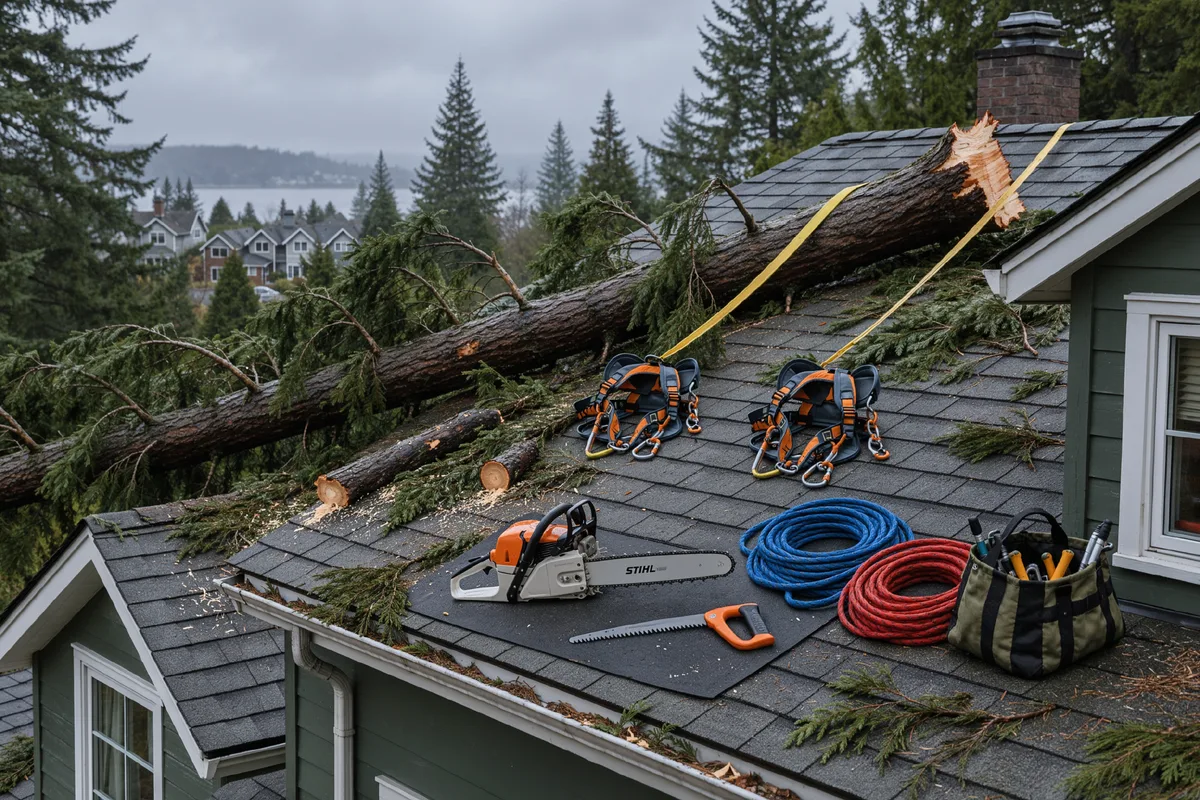
Tree damage ranges from scraped shingles to a punctured deck and broken rafters. In Seattle, where tall evergreens crowd many lots, the first job is keeping everyone safe and the rain out, then having a roofer look at the structure. Call the number on this page to be connected with a local roofing contractor in Seattle.
Safety comes before the roof
If a tree or limb has hit your house, stay off the roof and keep clear of anything that could be hanging from it. Puget Sound Energy advises assuming any downed line is energized, staying at least 35 feet away, and calling 911 or the utility instead of going near it. Seattle City Light clears fallen trees away from its power lines, but the tree itself, and the roof under it, are yours to sort out. Inside, stay out of rooms where the ceiling sags or cracks.
What a Seattle tree strike usually looks like
Winter windstorms come off the Pacific and push through Puget Sound's many tall trees. A strike can be a limb that cracked a few shingles, a trunk that crushed a section of roof, or something in between. Older craftsman homes with cedar or fir close to the walls and rooflines are common targets, and so are newer subdivisions with mature trees left standing between lots.
From the ground, or with binoculars, look for missing or folded shingles, a visible hole, a bent gutter, a sagging ridge or fascia that has pulled away. In the attic, use a flashlight to look for daylight, wet insulation or cracked rafters.
What to do while you wait
- Photograph the tree, the roof and any interior damage before anything is moved.
- Set buckets under drips and move furniture and valuables out of the way.
- Keep receipts for tarps and materials. The Washington Insurance Commissioner advises this, and says you have the right to pick your own contractor.
- Call your insurer, and talk to them before signing any assignment of benefits.
Many roofers take emergency tarping calls after hours; ask when you call. Tree removal is usually a separate trade, and a roofer will often want the tree cleared off the roof before repairs begin.
What repairs involve
A roofer will cover the opening first, then look at the decking, rafters, underlayment and shingles. Small hits may need only a patch of new shingles. A punctured deck means cutting out the damaged sheathing and replacing it. Framing damage can call for a structural repair first. Fixr's emergency roof guide gives national figures of $1.88 to $3.43 per square foot for replacing decking and $894 to $1,626 per square for replacing underlayment and covering after tree damage. Local bids will differ with roof pitch, access and materials.
Hiring for storm work
After a big blow, plenty of unfamiliar crews show up. Check each contractor on L&I's Verify a Contractor tool before you sign. It shows active registration, workers' comp status, citations and surety bond claims. Get a written scope that names the materials and who handles the permit, and ask whether the work includes cleanup. Seattle's rain season runs October through March, so ask how the roof will be kept dry between a temporary tarp and the final repair.
Tree Damage Roof Repair questions from Seattle homeowners
Should I go on the roof to look at the damage?
A power line came down with the tree. What now?
Will my insurance pay for tree damage to the roof?
Does the roofer also remove the tree?
Related roofing services in Seattle
Helpful guides
Tree Damage Roof Repair in nearby cities and towns
King County
Snohomish County
Pierce County
Kitsap County
Island County
Mason County
Jefferson County
Sources
Last updated: