Skylights sit in a hole cut through the roof, so every edge is a possible path for water. Older units and DIY sealant jobs are the usual suspects. A roofer can pinpoint the entry point before quoting. Call the number on this page to be connected with a local roofing contractor in Kingston.
Dark stains on the ceiling
A stain that grows after each rain, or one with a yellow edge, tells you water is finding a path past the opening. Stains that return after a repaint are a strong sign the source was never addressed. Mark the edge with a pencil and date it.
Where skylights usually leak
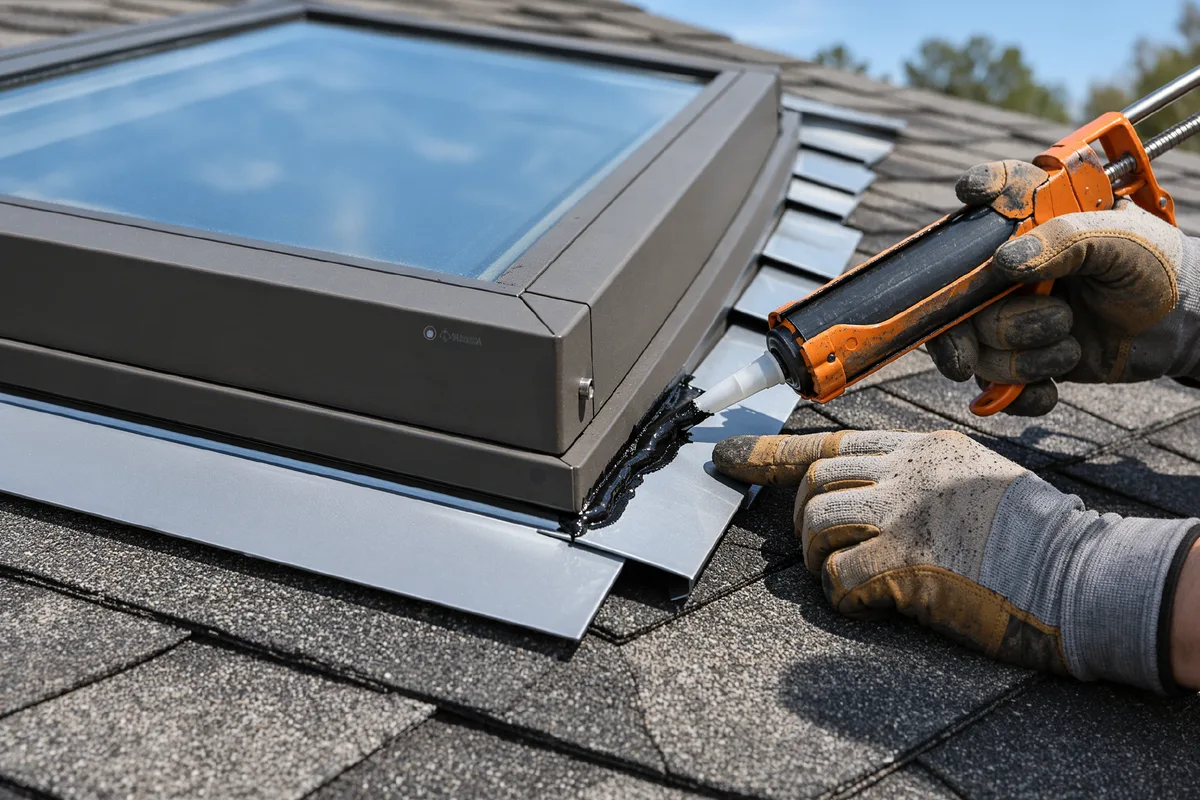
Most leaks start where the unit meets the roof, not through the glass. Failed sealant, a bent flashing piece, or shingles that no longer overlap the frame correctly let rain slip past. Corners and the lower edge take the heaviest flow, so they usually fail first.
Tall firs and cedars drop needles and moss onto roofs around here, and that debris collects uphill of a skylight, holds water and speeds up flashing and seal wear.
Wind-driven rain off the water pushes moisture sideways at skylight edges, and salt air corrodes metal flashing and fasteners, so waterfront units tend to need more frequent checks.
Roof pitch and height
A skylight on a low, walkable slope is simpler to reach than one high on a steep, mossy roof. Steep pitches and tall buildings call for extra safety gear and more labor, and wet weather can delay the work. Describe the roof as you see it from the ground.
After the repair
Once the work is done, look at the ceiling around the skylight during the next real rainstorm. A dry light well is the best test. Watch for any new staining over the following weeks and tell the roofer promptly if anything reappears, since early notice keeps small problems small.
Temporary protection
If a pane is broken, a roofer may place a protective cover over it. You can reduce interior damage by covering furniture and moving belongings. Avoid taping plastic over the outside yourself; that means going on the roof, which is where people get hurt. Cover things inside instead.
Know this about Kingston roofs
Reroof permits for Kingston addresses go through the Kitsap DCD. Its published rule: roofing permit required for residential if it includes structural work or more than 2,100 square feet of roofing materials are being replaced; always required for commercial.
Washington L&I registers construction contractors. Its free lookup shows whether a roofer's registration is active and whether there are claims against it.
Homes near the water around Kingston take more wind and salt exposure, which wears metal flashing and fasteners faster.
Fall and winter windstorms are the main source of sudden roof damage around Puget Sound. Lifted tabs and loose ridge caps are worth a look after a blow.
With big firs and cedars close to many homes in Kingston, falling limbs during windstorms are a real roof risk. Trimming overhanging branches helps.
Electric service here comes from PSE (outages: 888-225-5773). Keep away from any line touching the house or a fallen tree.
Contractors that take calls here usually also work in Edmonds, Indianola and Suquamish.
Skylight Repair questions in Kingston
What does it mean when a skylight fogs between the panes?
Is caulk enough to stop a skylight leak?
Is it safe to patch a skylight myself?
My skylight is old. Should I just replace it?
More roofing services in Kingston
Skylight Repair nearby
Helpful guides
Sources
Last updated: