After a windstorm, look from the ground for missing shingles, curled edges, shifted ridge caps and debris on the roof, then photograph what you see. A roofer can then confirm hidden damage and write up the repair. Call the number on this page to be connected with a local roofing contractor in Stanwood.
Quick damage checklist
| Where | Look for |
|---|---|
| Edges and ridge | Lifted or missing pieces |
| Vents and flashing | Bent, loose or gaps |
| Gutters | Shingle grit, debris |
Photograph each from the ground. Anything on this list merits a professional look, and the roofer will check the same spots up close, plus nail heads and sealant strips.
Debris impact versus wind lift
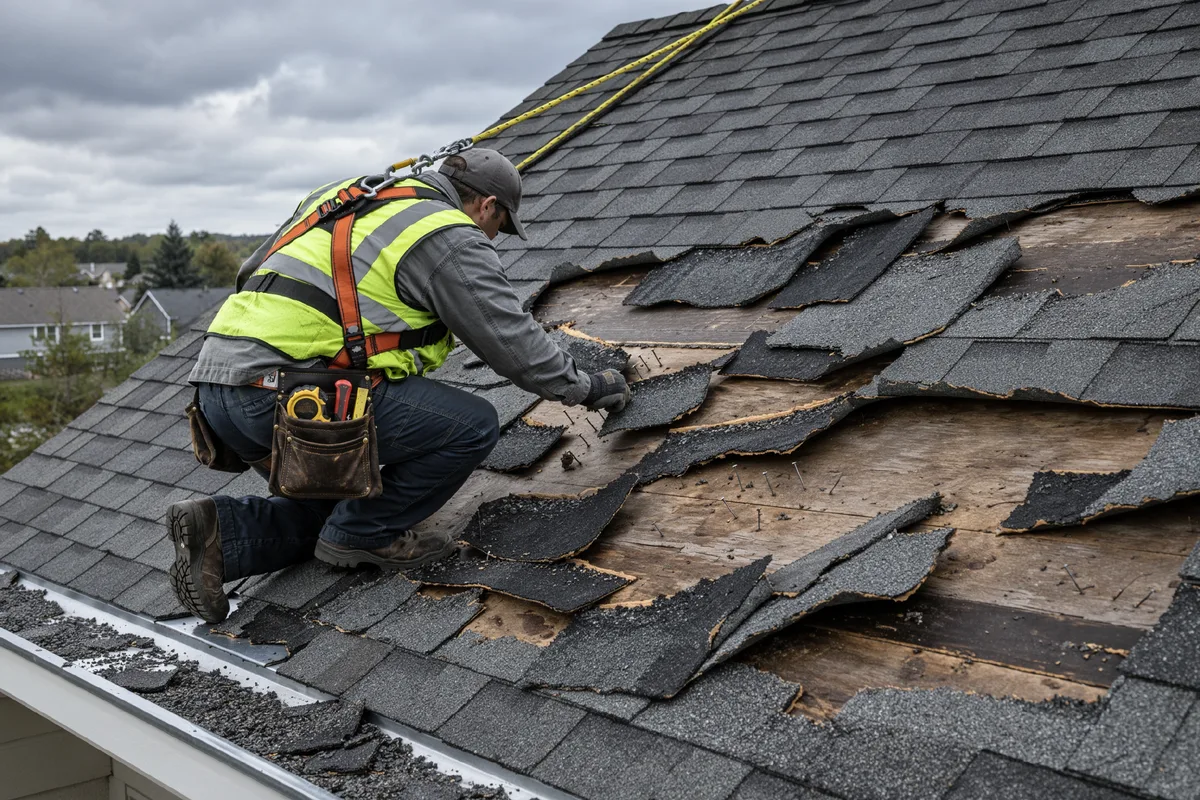
Wind lifts shingles, while flying branches and objects punch, dent or gouge them. The two look different, and the repair differs too. The roofer separates them, which also helps when a carrier wants to know what caused each mark on the roof. Photos from both views help.
Wind and salt air together wear on flashing and fasteners near the water, which a roofer can check during a storm inspection.
Documenting damage for a claim
- Photograph the roof from the ground, wide and close
- Capture debris, ceilings and attic wood
- Note the date, time and weather
- Save receipts for protective steps
A roofer's written findings, with photos of each damaged slope, add weight. Keep dated copies together in one folder for the adjuster.
Repair scope after a storm
A roofer may replace single shingles, redo a damaged section, reseal lifted tabs, refasten flashing or re-cap the ridge. The scope depends on how many pieces were lost, how old the roof is, and whether decking or underlayment took water. Ask which items likely apply here.
When a small problem is not small
One missing shingle can expose underlayment, and exposed underlayment can fail in the next storm. Treat even modest damage as time-sensitive in the wet season. A quick inspection costs little compared with replacing wet decking or ceilings. Waiting can turn a modest repair into a wet-deck replacement.
Permits, weather and roofs in Stanwood
If the job grows from a patch into a full reroof or framing repair, check with the City of Stanwood permit office before work starts.
Washington requires roofing contractors to register with the Department of Labor & Industries. L&I's Verify a Contractor tool shows a company's registration status before you sign anything.
Homes near the water around Stanwood take more wind and salt exposure, which wears metal flashing and fasteners faster.
Fall and winter windstorms are the main source of sudden roof damage around Puget Sound. Lifted tabs and loose ridge caps are worth a look after a blow.
Storm took out power too? Report it to Snohomish PUD at 425-783-1001, and stay clear of any downed line.
Because Stanwood is farther from the core of the metro, scheduling can take a little longer and some companies add a trip charge; ask when you call.
Calls from Stanwood are often matched with roofers who also cover Marysville, Camano Island and Langley.
Storm Damage Roof Repair questions in Stanwood
Should I get the roof checked even if it looks fine?
Do roofers repair or replace after wind damage?
Should I take a roofer's word after a storm?
Will a roofer provide a damage report?
More roofing services in Stanwood
Storm Damage Roof Repair nearby
Helpful guides
Sources
Last updated: