Wind rarely ruins a whole roof evenly. It tends to peel edges, ridges and corners first, and can crease shingles that still look in place. A roofer looks for those weaker spots. Call the number on this page to be connected with a local roofing contractor in Bainbridge Island.
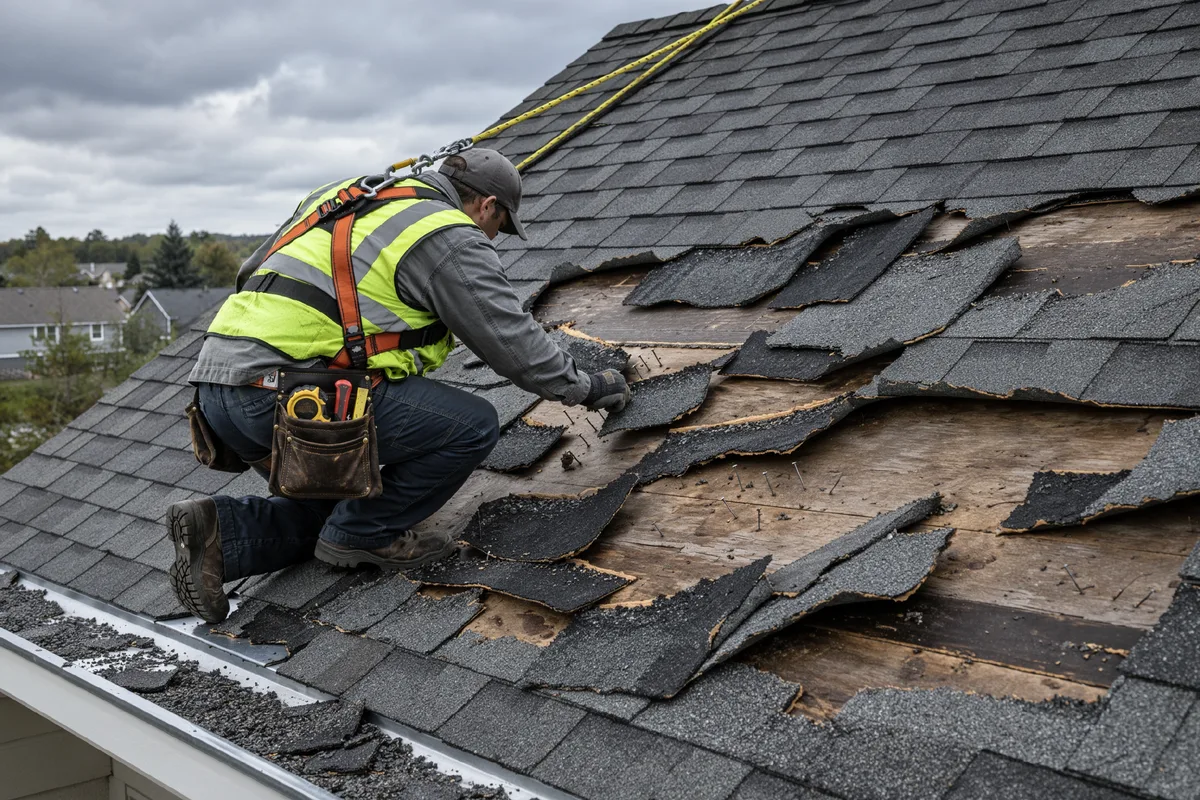
Damage you may not see right away
Wind can crack the sealant strip under a shingle, leaving the tab loose without any visible hole. Nail pops, creases and slight lifts show up later as leaks or tabs that flap in the next breeze. A roofer's close inspection finds what binoculars miss.
How shingles fail in wind
- Sealant strip lets go and tabs lift
- Nails pull through brittle mats
- Creases form where tabs fold back
- Whole courses peel from an edge
Each failure type calls for a different repair. A roofer checks the nails and sealant bond, then picks the matching fix.
Ferry crossings can be disrupted during storms, so roofers may schedule island repairs around ferry timetables and weather windows, and temporary cover may come first.
Wind and salt air together wear on flashing and fasteners near the water, which a roofer can check during a storm inspection.
Working with the adjuster
Ask the roofer to be available when the adjuster visits, if possible. Walk through the findings together and compare notes. If estimates differ, ask for the reasoning in writing. You are entitled to understand how each figure was reached. Ask for the adjuster's findings in writing too.
Choosing who does the work
Be careful after storms, when door-to-door crews appear. Check the roofer's registration with the state, ask for a written estimate, and avoid paying everything up front. A reputable roofer can answer questions without pressure to sign immediately. Compare at least two written bids if time allows.
Follow up after the next rain
If the roof was inspected or repaired, watch ceilings and the attic during the next heavy rain. New stains, damp insulation or a musty smell suggest something was missed. Call the roofer back promptly, since small leaks grow quietly in a wet climate. Do not wait.
Permits, weather and roofs in Bainbridge Island
Building permits for Bainbridge Island homes are handled by the City of Bainbridge Island permit office. Small repairs often need nothing, while a tear-off, new sheathing or structural work usually does, so ask the roofer who pulls the permit.
Washington L&I registers construction contractors. Its free lookup shows whether a roofer's registration is active and whether there are claims against it.
On the island, wind off the water and salt spray are hard on fasteners and flashing. Ask whether the company already works on Bainbridge Island homes.
Most roof trouble in this part of Washington shows up in the wet season, when a small gap in flashing or a lifted shingle has months of rain to work on.
Tall evergreens around Bainbridge Island drop needles that fill valleys and gutters and keep roofs shaded and damp, which is where moss starts.
Calls from Bainbridge Island are often matched with roofers who also cover Suquamish, Indianola and Silverdale.
Storm Damage Roof Repair questions in Bainbridge Island
What does wind damage to a roof look like?
How do I document storm damage for insurance?
Why did only one side of my roof get damaged?
Will a roofer provide a damage report?
More roofing services in Bainbridge Island
Storm Damage Roof Repair nearby
Helpful guides
Sources
Last updated: