Repairs after a storm can range from replacing a handful of shingles to a larger section, depending on age and how much was affected. The roofer explains which applies once they see the surface. Call the number on this page to be connected with a local roofing contractor in Indianola.
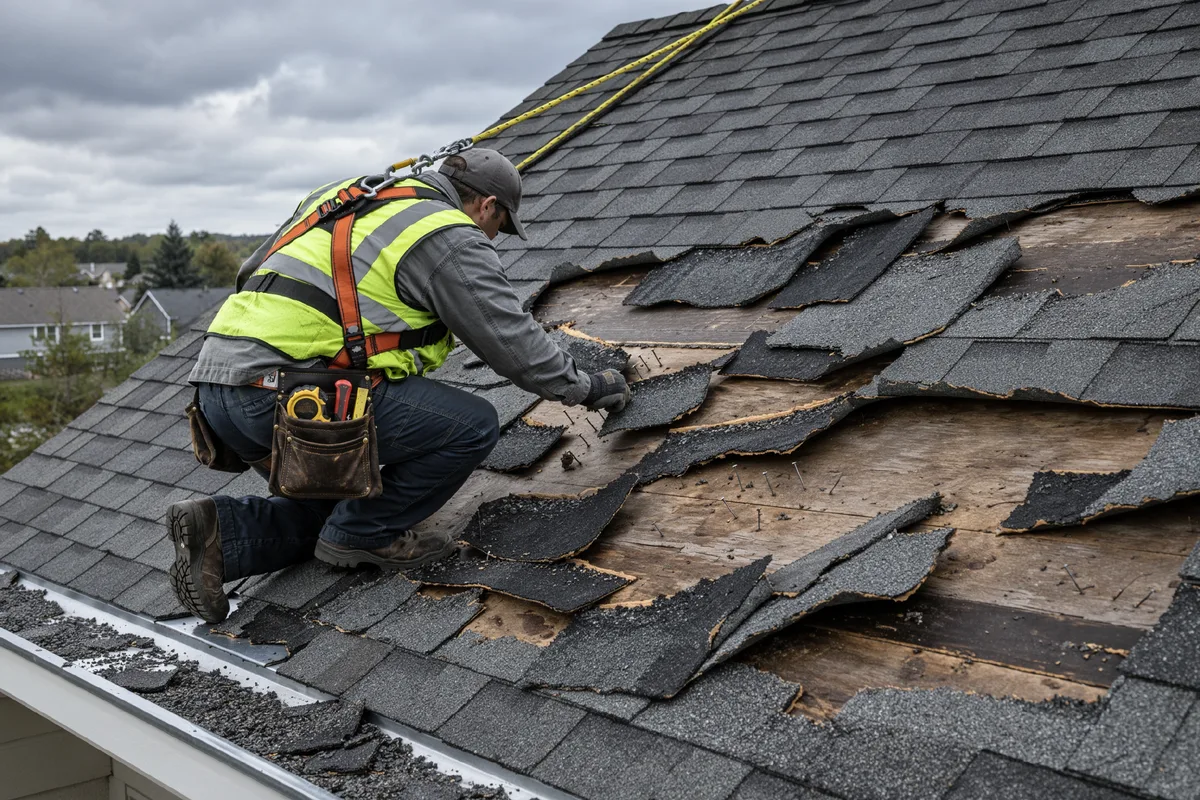
Debris tells the story
Check the yard for shingle tabs, torn flashing, bent vent covers and small branches. Matching a missing piece to a bare spot on the roof helps the roofer. Note where debris landed, since the wind direction often shows which slope took the hit. Keep the pieces you find.
Rain behind the wind
Storms here often combine high gusts with driving rain, which pushes water sideways under loosened tabs. Even small lifts can let water reach the underlayment and decking. That is why a roof that looks mostly intact may still leak at the edges. Ask the roofer to check how far water traveled.
Exposed shoreline and bluff locations see stronger winds, so ask the roofer to check sealant strips and fasteners on the most exposed slopes.
With so many tall trees nearby, wind damage here is often mixed with limb impact, which roofers assess separately for repairs and for claims.
Protect the roof meanwhile
Policies commonly expect reasonable steps to prevent further damage, such as temporary cover over an opening. Document those steps with photos and receipts before and after. Delay in protecting the home can complicate a claim for later water damage. Reasonable, documented steps are generally what carriers expect from owners.
Questions for the estimate
Ask what caused each damaged area, which parts are repair and which are replacement, how flashing and ridge will be handled, and whether any decking needs attention. A written scope makes it easier to compare bids and to share with an adjuster. Written details also help claims.
Roof notes for Indianola
On permits, the Kitsap DCD says: roofing permit required for residential if it includes structural work or more than 2,100 square feet of roofing materials are being replaced; always required for commercial.
A quick check that pays off: enter the contractor's name in L&I's online verify tool to confirm an active Washington registration.
Homes near the water around Indianola take more wind and salt exposure, which wears metal flashing and fasteners faster.
Months of steady rain, shaded roofs and mild temperatures make moss and debris a constant here. Gentle removal is better for shingles than a pressure washer.
Tall evergreens around Indianola drop needles that fill valleys and gutters and keep roofs shaded and damp, which is where moss starts.
Electric service here comes from PSE (outages: 888-225-5773). Keep away from any line touching the house or a fallen tree.
Nearby, the same kind of help is available in Bainbridge Island, Kingston and Suquamish.
Check the gutters and yard
Shingle grit in the downspouts, bent gutter sections and debris against the foundation hint at roof damage above. Clear debris you can safely reach from the ground, and keep what you find. It helps both the roofer and any claim. Save any damaged pieces you pick up.
Storm Damage Roof Repair questions in Indianola
Can I check the roof myself?
How soon should I report storm damage?
Do roofers repair or replace after wind damage?
Do I need a permit for storm repairs?
More roofing services in Indianola
Storm Damage Roof Repair nearby
Helpful guides
Sources
Last updated: