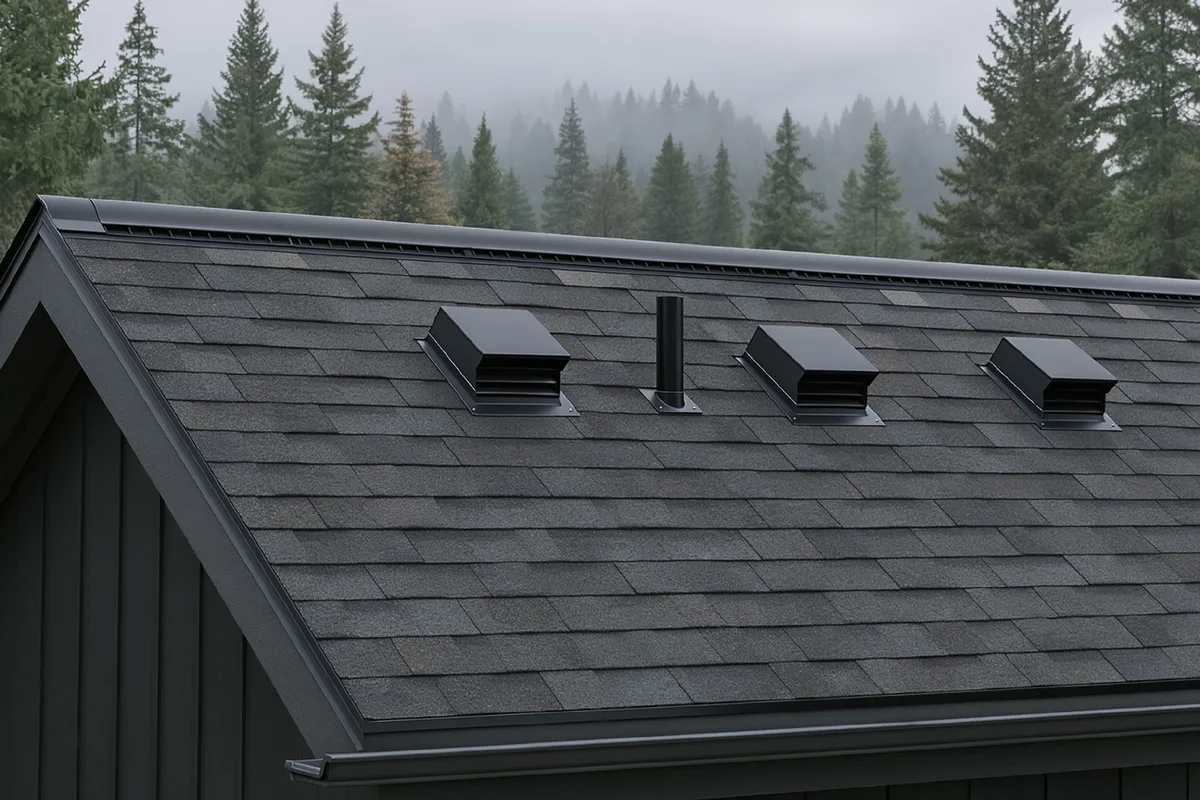
Most roofs need air entering low, usually through the soffits, and leaving high, through ridge or other exhaust vents. When one side is blocked or missing, the attic stays damp and the roof deck can rot over time. A roofer can trace where the flow stops. Call the number on this page to be connected with a local roofing contractor in Des Moines.
What condensation looks like up there
- Shiny drops on nail tips in cold weather
- Gray or black speckling on the plywood
- Matted, damp insulation
- Rusted fasteners or stained rafters
These point to moisture that has nowhere to go. Cracks and gray staining on wood are easy to miss without a flashlight, so look slowly.
Wet climate, extra moisture
Cool, damp months mean indoor humidity has little chance to escape outdoors, and attics stay saturated far longer than in dry regions. Cooking, laundry, crawlspace moisture and drying clothes indoors all add water that will find the attic. Indoor moisture from showers, laundry and cooking adds up quickly.
Homes built in the 1970s here may have blocked or painted-over soffit vents and old fans venting into the attic, which a roofer can trace during an inspection.
Homes near the water here see steady moist air and wind-driven rain, and vents with poor screens or caps can let weather into the attic.
What drives the quote
- Type of vents chosen
- Number of cuts through the roof or soffit
- Attic access and insulation to move
- Repairs to damaged decking
- Disposal and cleanup
Ask the roofer to walk through each item on the quote, since vent type and cut count often matter more than the overall roof area.
Useful local facts for Des Moines
For permit questions on a reroof, start with the City of Des Moines permit office. A contractor who works here regularly will know whether your job needs anything filed.
Washington L&I registers construction contractors. Its free lookup shows whether a roofer's registration is active and whether there are claims against it.
Homes near the water around Des Moines take more wind and salt exposure, which wears metal flashing and fasteners faster.
Months of steady rain, shaded roofs and mild temperatures make moss and debris a constant here. Gentle removal is better for shingles than a pressure washer.
Electric service here comes from PSE (outages: 888-225-5773). Keep away from any line touching the house or a fallen tree.
Much of the housing in Des Moines dates to the 1970s or earlier, so a tear-off can uncover older layers or board decking that need extra work.
Nearby, the same kind of help is available in SeaTac, Kent and Federal Way.
When mold is present
Visible mold on decking or insulation may need remediation separate from the roofing job. A roofer can fix the airflow problem that caused it, but cleaning or removal is often handled by another specialist. Ask how that handoff will work. Keep records of what was found.
Simple things you can do now
- Run bath fans during and after showers
- Keep dryer vents outdoors
- Use a dehumidifier in damp rooms
- Open closet doors under the roof
These reduce moisture while you wait. Open closet doors beneath the roof slope, and avoid drying laundry indoors on cold nights.
Roof Ventilation questions in Des Moines
Can a bathroom fan vent into the attic?
Do ridge vents work without soffit vents?
How do I know if my attic has enough ventilation?
Should insulation touch the roof deck?
More roofing services in Des Moines
Roof Ventilation nearby
Helpful guides
Sources
Last updated: