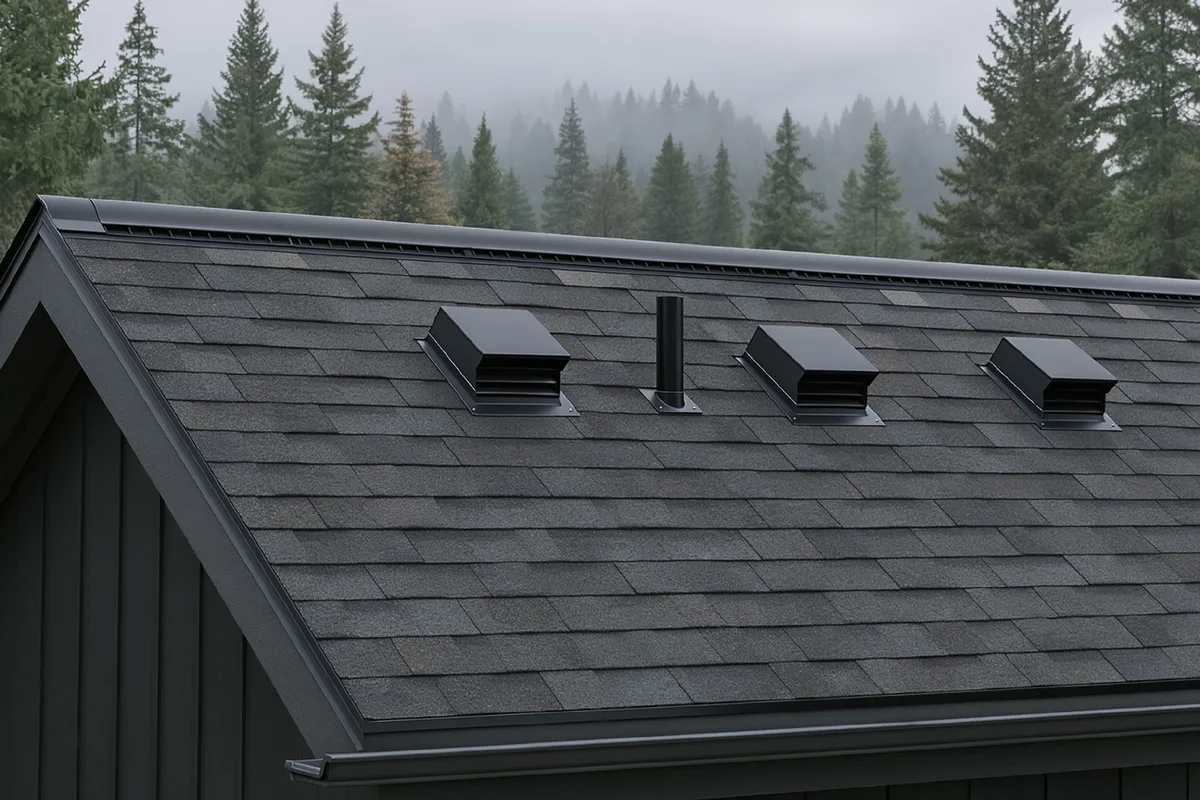
Ridge vents can improve exhaust airflow, but only when matching intake exists and the existing vents are not working against them. Mixing vent types is a common mistake that a roofer will look for. Cost and design depend on the roof shape and attic layout in this area. Call the number on this page to be connected with a local roofing contractor in Kingston.
Clues from outside the house
Look from the yard at the ridge and the eaves. Missing or painted-over soffit vents, a ridge with no opening, ice or damp streaks below roof edges after a cold snap, and moss on one slope can all hint at airflow problems inside. Take note of what you see.
Skylights, chimneys and other obstacles
Chimneys, skylight shafts and framing can dead-end airflow in a section of attic. Even when most of the roof breathes well, one cut-off bay can stay wet and rot. Roofers look for these pockets when tracing air paths. Those hidden pockets can stay damp all winter without anyone noticing.
Needles and debris from nearby firs can gum up vent screens, so a roofer checking airflow on wooded lots will often clear intake areas first.
Salt air near the shoreline corrodes metal vents and fasteners faster, so ask the roofer about materials that last in a coastal setting.
Cleanup and damage add work
If condensation has already rotted boards or soaked insulation, repairs will be on top of the ventilation job. A roofer can judge how far the damage has spread. Cutting out soft decking is better done once, before new vents go in. Ask about decking inspection.
Repair, add or redesign
Sometimes clearing soffits and adding baffles is enough. Other times, ridge vents or a different vent mix is better. Occasionally the best answer is to redo a poorly planned ventilation setup entirely. The roofer should explain why they suggest each approach. Ask for the reasoning in writing.
Safe steps before the roofer comes
Stay off the roof. From the attic hatch, shine a flashlight along the boards and note damp or stained areas. Photograph the insulation, vents and fan ducts, and write down when you notice the problem worst. Do not walk on attic framing without boards.
Roof notes for Kingston
Permit note from the Kitsap DCD: Roofing permit required for residential if it includes structural work or more than 2,100 square feet of roofing materials are being replaced; always required for commercial.
Washington requires roofing contractors to register with the Department of Labor & Industries. L&I's Verify a Contractor tool shows a company's registration status before you sign anything.
Homes near the water around Kingston take more wind and salt exposure, which wears metal flashing and fasteners faster.
Months of steady rain, shaded roofs and mild temperatures make moss and debris a constant here. Gentle removal is better for shingles than a pressure washer.
Tall evergreens around Kingston drop needles that fill valleys and gutters and keep roofs shaded and damp, which is where moss starts.
Electric service here comes from PSE (outages: 888-225-5773). Keep away from any line touching the house or a fallen tree.
Calls from Kingston are often matched with roofers who also cover Edmonds, Indianola and Suquamish.
Roof Ventilation questions in Kingston
What causes condensation in an attic?
Can ventilation be added to an existing roof?
Do I need a permit to add roof vents?
Should I use a dehumidifier in the attic?
More roofing services in Kingston
Roof Ventilation nearby
Helpful guides
Sources
Last updated: