Condensation in an attic usually comes from warm, moist indoor air reaching cold roof boards, and with long wet winters here the damage can build quietly. A roofer can check whether intake and exhaust airflow are balanced and whether any fans dump moisture upstairs. Call the number on this page to be connected with a local roofing contractor in Suquamish.
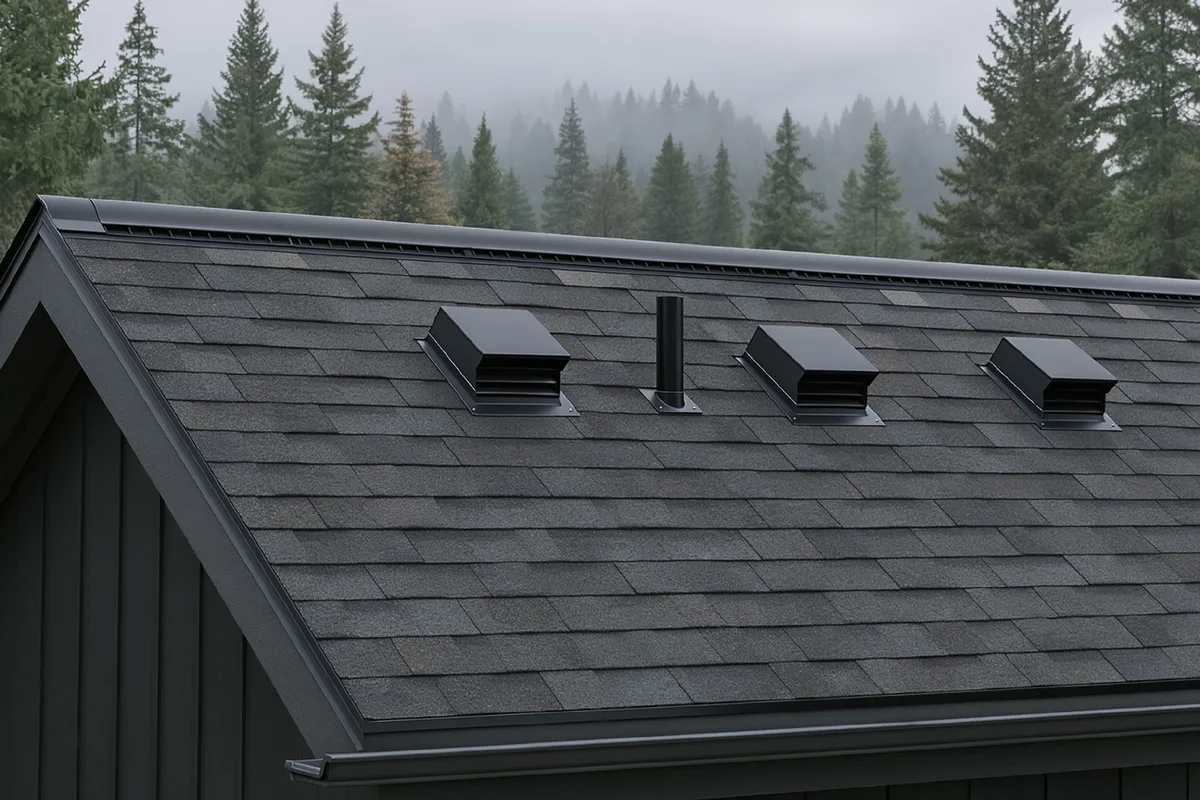
Questions to ask yourself
- Does the attic smell musty or damp?
- Are roof boards dark or stained?
- Is insulation wet or pressed against the roof?
Yes to any of these is worth a roofer's opinion before it spreads. Photographs of the framing and insulation make the phone conversation more useful.
Bath fans and kitchen exhaust
A fan that ends in the attic dumps a shower's worth of steam onto cold wood every day. Even a duct that is disconnected or sags can leak moisture. Fans should run through insulated duct to a proper outdoor termination, not just near a vent.
Needles and debris from nearby firs can gum up vent screens, so a roofer checking airflow on wooded lots will often clear intake areas first.
Salt air near the shoreline corrodes metal vents and fasteners faster, so ask the roofer about materials that last in a coastal setting.
Fan ducting adds to the scope
Moving a bathroom fan from the attic to the outside means new duct, a roof or wall cap, and sealing around the opening. Access, run length and attic space all change the cost. Ask whether the work includes insulating the duct. Attic layout affects both.
Permits, weather and roofs in Suquamish
Reroof permits for Suquamish addresses go through the Kitsap DCD. Its published rule: roofing permit required for residential if it includes structural work or more than 2,100 square feet of roofing materials are being replaced; always required for commercial.
Washington requires roofing contractors to register with the Department of Labor & Industries. L&I's Verify a Contractor tool shows a company's registration status before you sign anything.
Homes near the water around Suquamish take more wind and salt exposure, which wears metal flashing and fasteners faster.
Most roof trouble in this part of Washington shows up in the wet season, when a small gap in flashing or a lifted shingle has months of rain to work on.
With big firs and cedars close to many homes in Suquamish, falling limbs during windstorms are a real roof risk. Trimming overhanging branches helps.
Calls from Suquamish are often matched with roofers who also cover Silverdale, Poulsbo and Indianola.
Combining ventilation with roof work
If shingles are near the end of their life, venting upgrades fit well into the project. New underlayment, flashing and vents are installed together, and any wet decking can be swapped out while the roof is open. Ask what will be replaced while the roof is open.
Mold and health cautions
Dark growth on attic wood can irritate lungs and skin. Avoid disturbing it, and keep the attic hatch closed if you smell mustiness. Mention any health concerns when you call so the roofer can advise on safe next steps. Do not use bleach or sprays up there.
Roof Ventilation questions in Suquamish
Is condensation the same as a roof leak?
Can a bathroom fan vent into the attic?
Is mold in the attic dangerous?
Are powered attic fans a good idea?
More roofing services in Suquamish
Roof Ventilation nearby
Helpful guides
Sources
Last updated: