Because the work involves open flame near a wood structure, only trained roofers should apply it, and homeowners should never try it. Roofers use fire-safety steps before, during and after the job. Call the number on this page to be connected with a local roofing contractor in Seabeck.
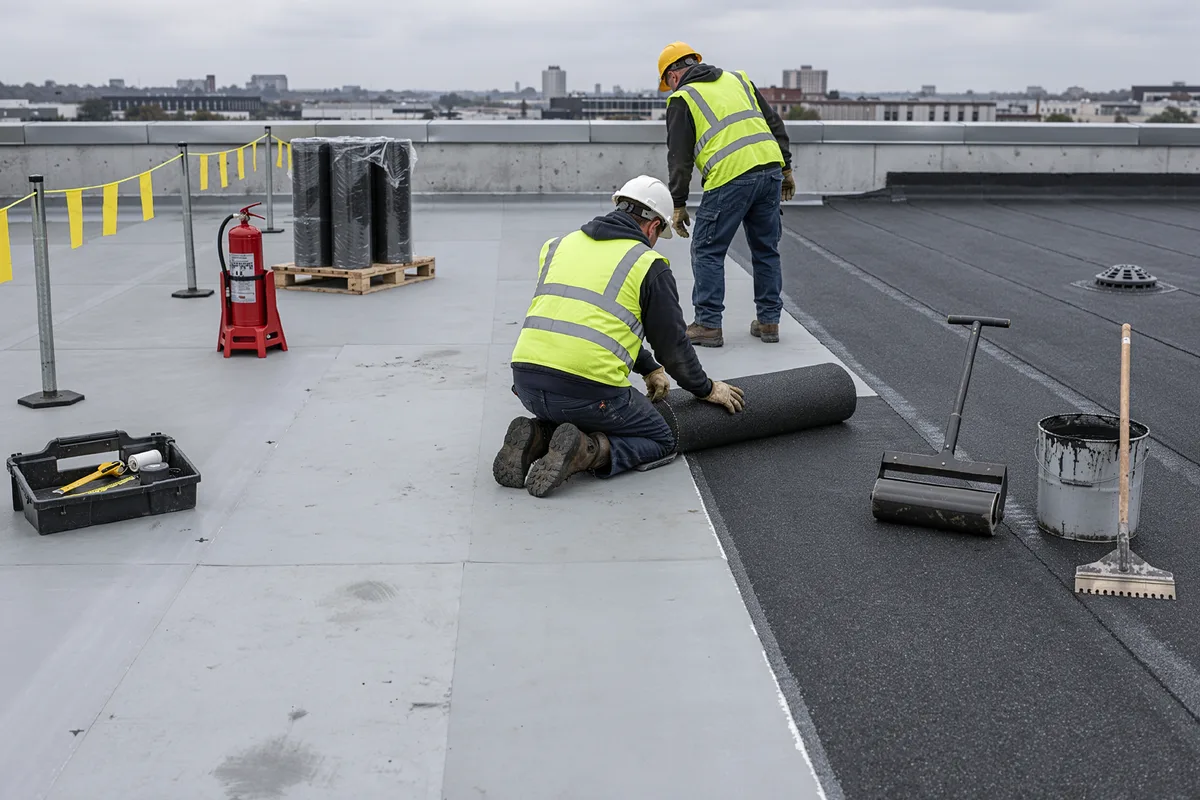
Layers, base sheet and cap sheet
A typical system has a base sheet over the deck and one or more plies above it, finished with a granulated cap sheet. The granules shield the asphalt from sunlight. Each layer adds thickness, and the sheets are lapped so water cannot run beneath.
Where a torch should not go
Open flame is a poor fit for roofs over combustible gaps, old dry framing or tight cavities. In those cases, a roofer may choose a cold-applied, self-adhered or heat-welded product instead. Ask why a method was chosen for your building. Ask what the roofer plans to use.
Overhanging branches near a low roof can scrape granules and puncture the cap sheet, so roofers often suggest trimming as part of the job.
Salt spray speeds corrosion of fasteners and drip edges around a bitumen roof, so ask the roofer what metals and finishes he plans to use.
How torch-down roofs fail
Common failures include open laps, blisters, granule loss, cracks at flashings and splits across the surface. Water that sits in low spots speeds each one. Most develop gradually, which is why small signs deserve a look before they become interior leaks. Early repairs are usually smaller jobs.
Recover or tear off?
A new cap sheet can sometimes go over sound existing layers, saving time and disposal. If the old roof is wet, blistered throughout or too thick, the roofer may strip it to the deck. Expect that choice to move the estimate. Disposal and deck repair are usually listed separately.
What to ask the roofer
- How do you protect the building from the torch?
- Will you strip or recover the old roof?
- What happens at walls, drains and edges?
- What manufacturer warranties apply to the material?
Get answers before work starts. Get answers before work starts and keep notes of what each roofer says.
Local details for Seabeck
Reroof permits for Seabeck addresses go through the Kitsap DCD. Its published rule: roofing permit required for residential if it includes structural work or more than 2,100 square feet of roofing materials are being replaced; always required for commercial.
A quick check that pays off: enter the contractor's name in L&I's online verify tool to confirm an active Washington registration.
Homes near the water around Seabeck take more wind and salt exposure, which wears metal flashing and fasteners faster.
Most roof trouble in this part of Washington shows up in the wet season, when a small gap in flashing or a lifted shingle has months of rain to work on.
With big firs and cedars close to many homes in Seabeck, falling limbs during windstorms are a real roof risk. Trimming overhanging branches helps.
Calls from Seabeck are often matched with roofers who also cover Silverdale, Bremerton and Quilcene.
Torch-Down Roofing questions in Seabeck
Is torch-down roofing safe?
What are cap sheets?
Is torch-down better than TPO?
What should I do if I smell smoke during roofing work?
More roofing services in Seabeck
Torch-Down Roofing nearby
Helpful guides
Sources
Last updated: