Owners and managers should ask for the roofer's registration, a written scope, photos of the problem areas and how tenants will be protected. Call the number on this page to be connected with a local roofing contractor in Seabeck.
Warehouses and larger footprints
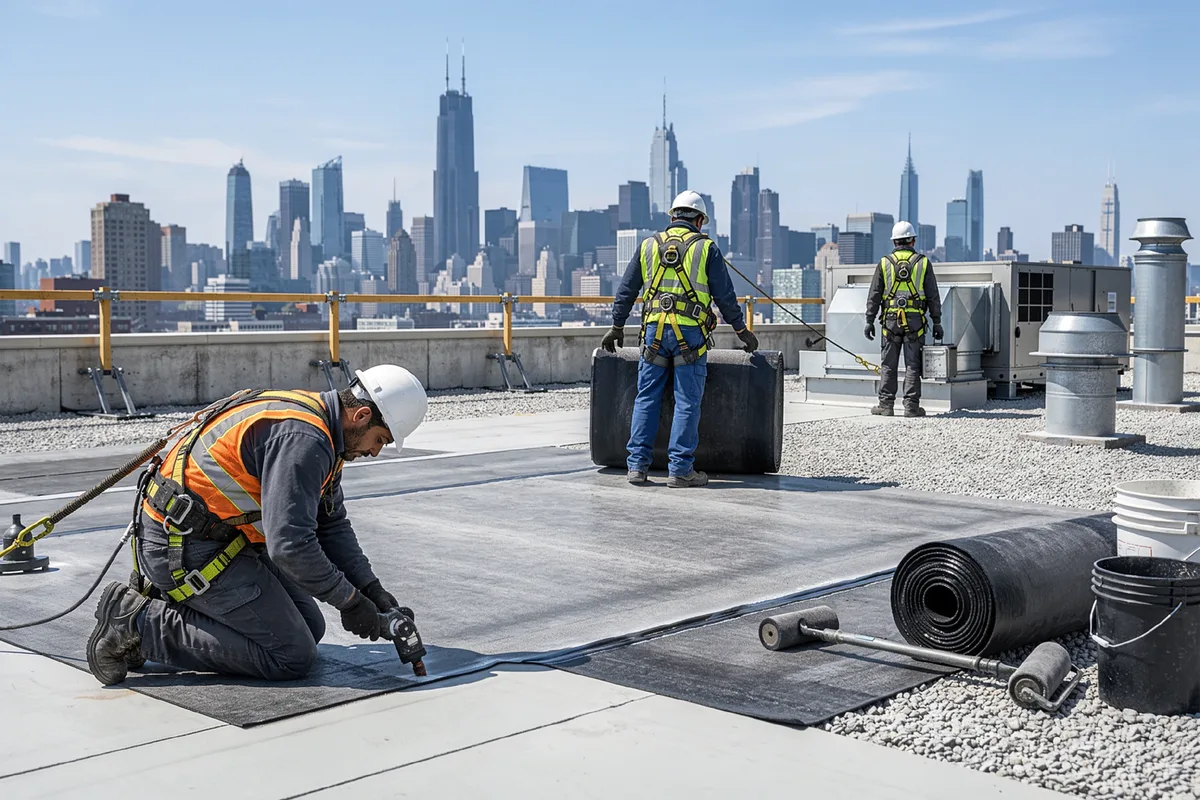
Big roofs cover big areas, and small leaks can travel far across a deck. Roofers use moisture scans, drain maps and sections to isolate problems. Forklift traffic and stored goods below make planning even more important. Ask how the crew will protect stored goods and keep forklift lanes clear.
Scheduling around tenants
Roofers plan noise, parking, access and roof hours with the manager before work starts. Loud steps may be moved to quieter times. A written schedule with notice to tenants prevents complaints and keeps the project from stalling. Ask the roofer to put the plan in writing and share it with the manager.
Properties outside city limits answer to the county permit office, and longer drives or private access roads can affect crane, dumpster and material delivery planning.
Wind off the water and salt air wear at edge metal, fasteners and flashing on shoreline commercial roofs, so roofers look closely at the perimeter.
Repair, coat or replace
Localized leaks on a sound roof call for repair. A dry but worn roof may suit a coating. Wet insulation and widespread failure point toward replacement. A condition report helps managers choose among the three based on evidence, not guesses. Ask the roofer to show the evidence behind each recommendation.
How roofers find wet insulation
Methods include moisture meters, infrared scans and cut samples. Wet insulation lowers performance and can hide leaks far from the stain. Finding it early lets managers decide between spot repairs and replacing sections. Ask the roofer to explain which method suits your building and how reliable each result is.
Hiring checklist
- Registration with Washington L&I verified
- Written scope and photos of problems
- Tenant, parking and safety plan
- Warranty terms in writing
Compare at least two bids when time allows. Ask each roofer the same questions and compare answers side by side before choosing, then keep the written responses with the building records.
Local details for Seabeck
Permit note from the Kitsap DCD: Roofing permit required for residential if it includes structural work or more than 2,100 square feet of roofing materials are being replaced; always required for commercial.
Washington L&I registers construction contractors. Its free lookup shows whether a roofer's registration is active and whether there are claims against it.
Homes near the water around Seabeck take more wind and salt exposure, which wears metal flashing and fasteners faster.
Most roof trouble in this part of Washington shows up in the wet season, when a small gap in flashing or a lifted shingle has months of rain to work on.
Tall evergreens around Seabeck drop needles that fill valleys and gutters and keep roofs shaded and damp, which is where moss starts.
Contractors that take calls here usually also work in Silverdale, Bremerton and Quilcene.
Commercial Roofing questions in Seabeck
Does a commercial reroof need a permit?
Can roofing continue while the building is open?
Do manufacturer warranties matter?
How do I check a roofer is registered in Washington?
More roofing services in Seabeck
Commercial Roofing nearby
Helpful guides
Sources
Last updated: