Roofs in this part of Washington deal with months of rain, shade and moss, plus fall windstorms that lift shingles and drop limbs. Most failures start small, at flashing, vents or worn shingles, and grow with each wet season. Call the number on this page to be connected with a local roofing contractor in Silverdale.
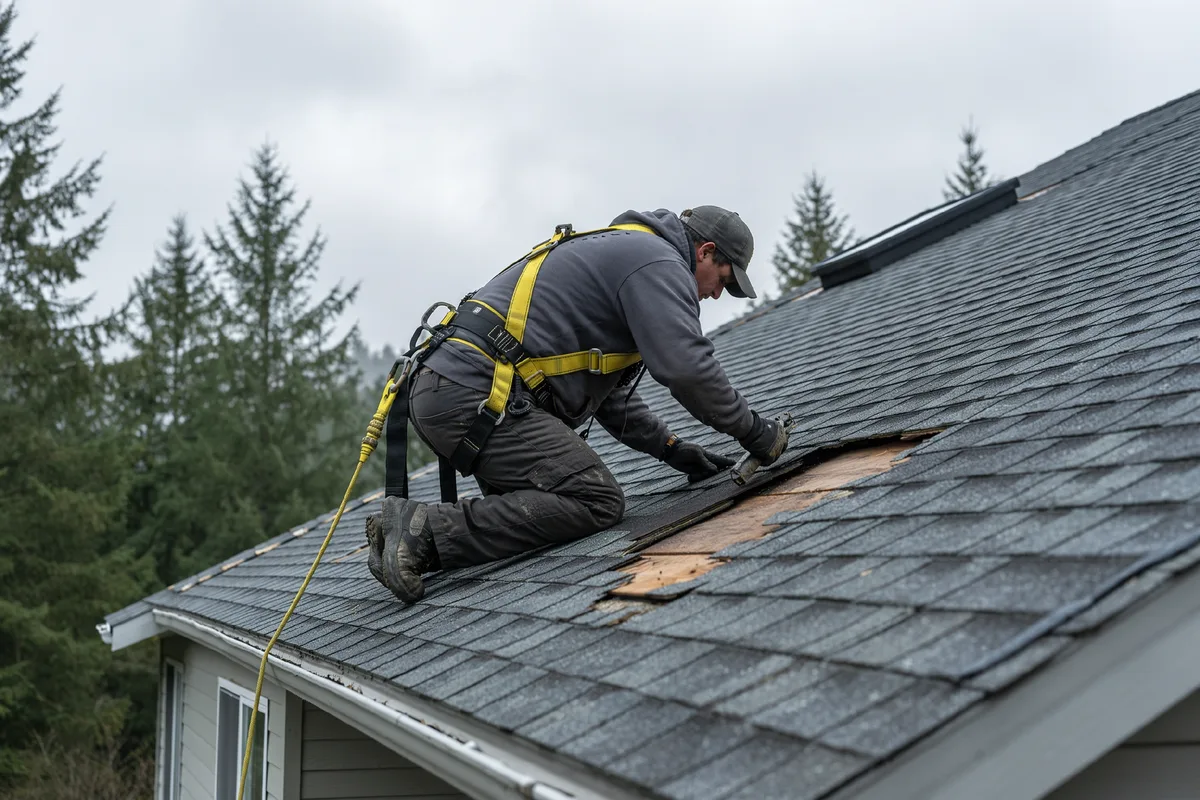
Roofing services in Silverdale
What to watch for after a storm
- Shingle pieces or tabs in the yard or gutters
- Bare patches or lifted edges on the roof
- Bent flashing near chimneys or vents
- Fresh stains on ceilings or in the attic
Check these from the ground and photograph anything that looks different before you call a roofer. Take a few photos while the weather is dry.
Flashing and penetrations leak first
Many leaks start at chimneys, skylights, vent pipes, valleys and wall joints rather than in the open shingle field. These details rely on metal and sealant that corrode, shift and crack with age. A repair that skips them often just moves the leak to a nearby spot. Replacing only the surface rarely fixes it, since the source usually sits at one of these details.
Heavy tree cover in this part of Kitsap County keeps roofs damp longer, which speeds moss growth and wear, and falling branches add a storm risk.
This area sits outside city limits, so county rules apply, and rural properties often have outbuildings with roofs that need attention too.
When a repair makes sense
- Storm damage limited to a few shingles
- A leak traced to one flashing or vent
- The rest of the roof has plenty of life left
- Decking is dry and firm
In those cases, a targeted fix is often the sensible route and keeps the budget focused. Ask roofers to explain how they would handle the old materials, and whether they expect any surprises.
Financing and payment questions
Ask about the payment schedule, deposits and when the final payment is due. Reasonable terms tie payments to progress rather than asking for everything up front. Confirm the details in writing, and keep records of every payment you make along the way for your files. Ask for a clear written payment schedule, and never pay the full amount before the work is finished.
How this referral service works
Roofing Seattle is a referral line, not a roofing company. You call, describe the roof problem, and are connected with an independent local roofer. The roofer sets their own pricing and terms, so confirm the scope and any details with them directly before agreeing to work. Keep the roofer's contact details and any written quote handy for future reference.
Safe steps before you call
Stay off the roof, especially when wet, mossy or windy. From the ground, look for damage with binoculars. In the attic, use a flashlight to check for stains and damp insulation. Put a bucket under any drip, move belongings, and take clear photos so a roofer can understand the problem. Photos help the roofer a great deal.
Roof notes for Silverdale
Permit note from the Kitsap DCD: Roofing permit required for residential if it includes structural work or more than 2,100 square feet of roofing materials are being replaced; always required for commercial.
A quick check that pays off: enter the contractor's name in L&I's online verify tool to confirm an active Washington registration.
Most roof trouble in this part of Washington shows up in the wet season, when a small gap in flashing or a lifted shingle has months of rain to work on.
Tall evergreens around Silverdale drop needles that fill valleys and gutters and keep roofs shaded and damp, which is where moss starts.
Storm took out power too? Report it to PSE at 888-225-5773, and stay clear of any downed line.
If the damage came from a storm, write down the date and keep your photos; you may want them for an insurance claim.
Nearby, the same kind of help is available in Poulsbo, Suquamish and Seabeck.
Common questions in Silverdale
How do I know if my roof needs repair or replacement?
Why is my ceiling stained when the roof looks fine?
How long does a roof last in this climate?
What does a referral service do?
Nearby cities and towns
Sources
Last updated: