Ridge vents can improve exhaust airflow, but only when matching intake exists and the existing vents are not working against them. Mixing vent types is a common mistake that a roofer will look for. Cost and design depend on the roof shape and attic layout in this area. Call the number on this page to be connected with a local roofing contractor in Stanwood.
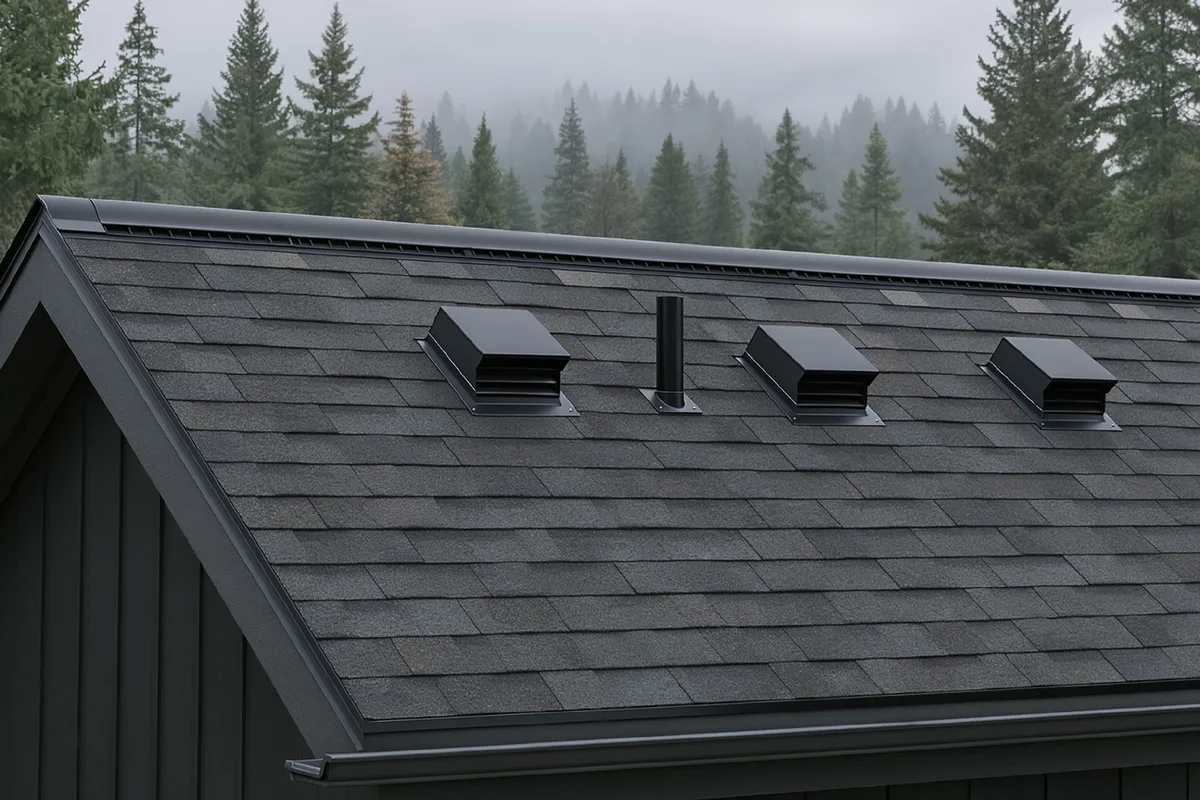
Clues from outside the house
Look from the yard at the ridge and the eaves. Missing or painted-over soffit vents, a ridge with no opening, ice or damp streaks below roof edges after a cold snap, and moss on one slope can all hint at airflow problems inside. Take note of what you see.
Roof shape changes the answer
Cathedral ceilings, dormers, low-slope additions and complex hips give air little room to travel. Some roofs need baffles or special vents rather than standard ridge cuts, which is why a roofer has to see the framing before recommending a layout. Each layout needs its own airflow plan.
Salt air near the shoreline corrodes metal vents and fasteners faster, so ask the roofer about materials that last in a coastal setting.
What drives the quote
- Type of vents chosen
- Number of cuts through the roof or soffit
- Attic access and insulation to move
- Repairs to damaged decking
- Disposal and cleanup
Ask the roofer to walk through each item on the quote, since vent type and cut count often matter more than the overall roof area.
Combining ventilation with roof work
If shingles are near the end of their life, venting upgrades fit well into the project. New underlayment, flashing and vents are installed together, and any wet decking can be swapped out while the roof is open. Ask what will be replaced while the roof is open.
Track the pattern over time
Note whether signs appear after cold nights, hot days or heavy showers. Patterns help the roofer sort condensation from leaks. A leak shows up after rain, while condensation follows temperature and humidity swings. Photograph conditions on cold mornings and warm afternoons for comparison, and tell the roofer.
Permits, weather and roofs in Stanwood
Building permits for Stanwood homes are handled by the City of Stanwood permit office. Small repairs often need nothing, while a tear-off, new sheathing or structural work usually does, so ask the roofer who pulls the permit.
Washington requires roofing contractors to register with the Department of Labor & Industries. L&I's Verify a Contractor tool shows a company's registration status before you sign anything.
Homes near the water around Stanwood take more wind and salt exposure, which wears metal flashing and fasteners faster.
Most roof trouble in this part of Washington shows up in the wet season, when a small gap in flashing or a lifted shingle has months of rain to work on.
Storm took out power too? Report it to Snohomish PUD at 425-783-1001, and stay clear of any downed line.
Calls from Stanwood are often matched with roofers who also cover Marysville, Camano Island and Langley.
Roof Ventilation questions in Stanwood
How do I know if my attic has enough ventilation?
Are powered attic fans a good idea?
Do I need a permit to add roof vents?
What does a ventilation inspection involve?
More roofing services in Stanwood
Roof Ventilation nearby
Helpful guides
Sources
Last updated: