Most roofs need air entering low, usually through the soffits, and leaving high, through ridge or other exhaust vents. When one side is blocked or missing, the attic stays damp and the roof deck can rot over time. A roofer can trace where the flow stops. Call the number on this page to be connected with a local roofing contractor in Bainbridge Island.
What condensation looks like up there
- Shiny drops on nail tips in cold weather
- Gray or black speckling on the plywood
- Matted, damp insulation
- Rusted fasteners or stained rafters
These point to moisture that has nowhere to go. Cracks and gray staining on wood are easy to miss without a flashlight, so look slowly.
Too many kinds of vents
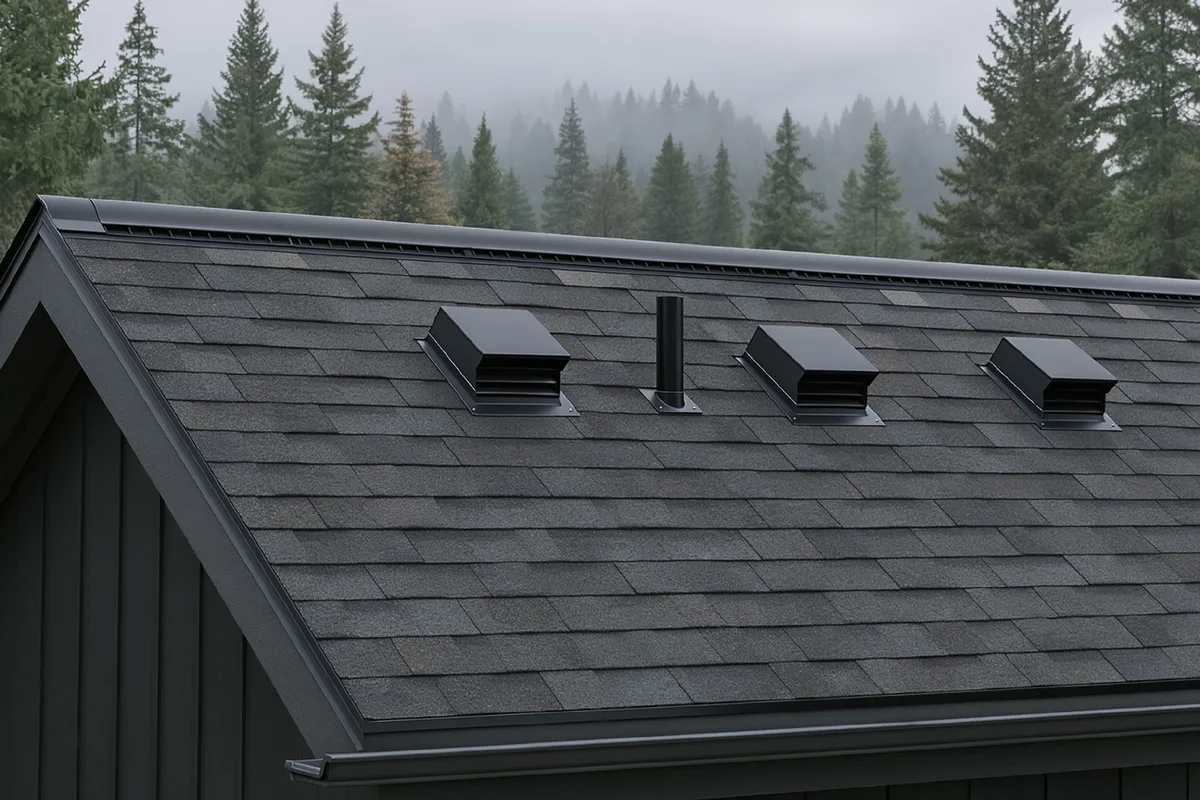
Gable vents, box vents, turbines and ridge vents on one roof can short-circuit each other, pulling air from the nearest opening instead of the soffits. Roofers often remove or block extras so the system flows as a single path. Simpler layouts usually perform better overall.
Needles and debris from nearby firs can gum up vent screens, so a roofer checking airflow on wooded lots will often clear intake areas first.
Salt air near the shoreline corrodes metal vents and fasteners faster, so ask the roofer about materials that last in a coastal setting.
Material choices for vents
Ridge vents, low-profile box vents, powered fans and soffit panels differ in cost, appearance and long-term performance. Passive vents are common; powered ones can complicate airflow. Ask the roofer why a certain type fits your roof before agreeing to it. Appearance and warranty vary as well.
Warranties and manufacturer notes
Some shingle manufacturers expect adequate ventilation and may question claims on a poorly vented roof. Ask the roofer what applies to your roofing and how new vents affect it. Keep any paperwork from the work. Ask what is covered, since coverage differs between products and installers.
Track the pattern over time
Note whether signs appear after cold nights, hot days or heavy showers. Patterns help the roofer sort condensation from leaks. A leak shows up after rain, while condensation follows temperature and humidity swings. Photograph conditions on cold mornings and warm afternoons for comparison, and tell the roofer.
Know this about Bainbridge Island roofs
Building permits for Bainbridge Island homes are handled by the City of Bainbridge Island permit office. Small repairs often need nothing, while a tear-off, new sheathing or structural work usually does, so ask the roofer who pulls the permit.
A quick check that pays off: enter the contractor's name in L&I's online verify tool to confirm an active Washington registration.
Island homes like those in Bainbridge Island face open-water wind and salt air, and a roofer's travel by ferry or bridge can affect scheduling, so ask about timing when you call.
Fall and winter windstorms are the main source of sudden roof damage around Puget Sound. Lifted tabs and loose ridge caps are worth a look after a blow.
With big firs and cedars close to many homes in Bainbridge Island, falling limbs during windstorms are a real roof risk. Trimming overhanging branches helps.
Calls from Bainbridge Island are often matched with roofers who also cover Suquamish, Indianola and Silverdale.
Roof Ventilation questions in Bainbridge Island
How do I know if my attic has enough ventilation?
Does poor ventilation shorten a roof's life?
Do I need a permit to add roof vents?
Should I use a dehumidifier in the attic?
More roofing services in Bainbridge Island
Roof Ventilation nearby
Helpful guides
Sources
Last updated: