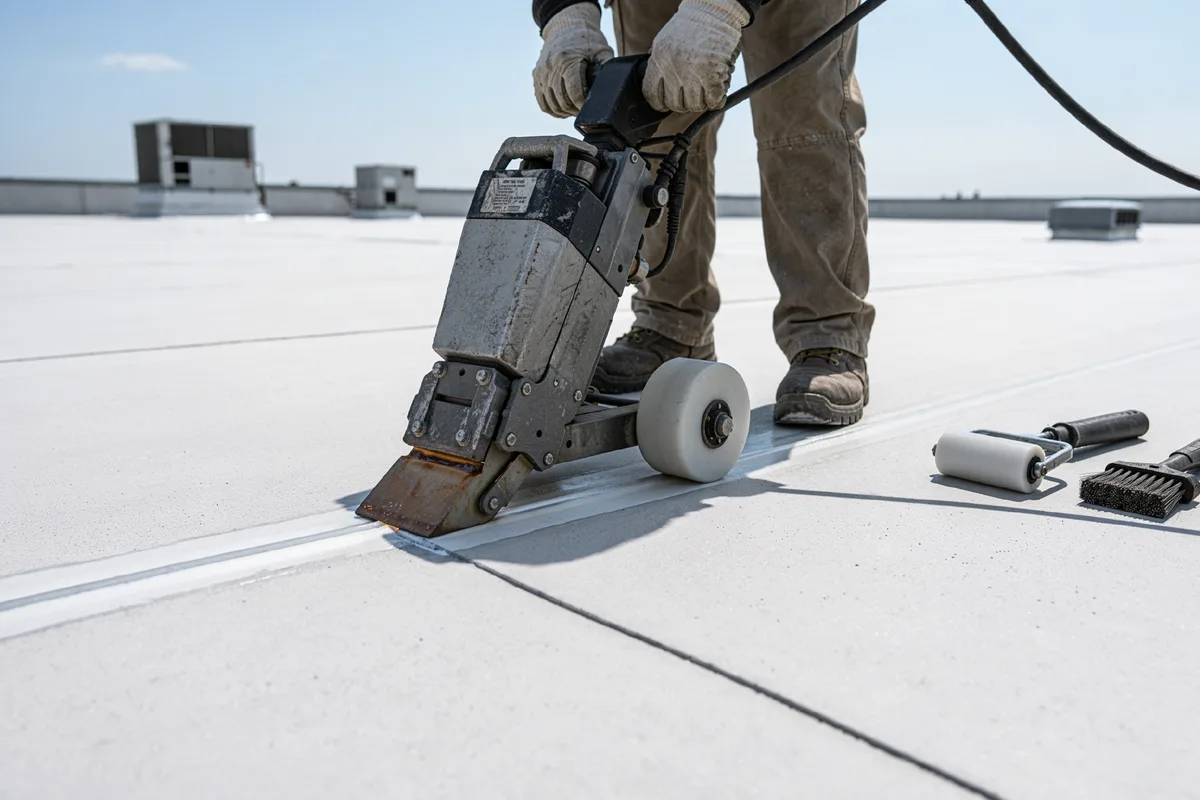
TPO is a single-ply membrane made from thermoplastic polyolefin, usually white, with seams that a roofer welds together with hot air. It is rolled across the roof in wide sheets. Call the number on this page to be connected with a local roofing contractor in Kingston.
What a TPO roof is
TPO is a thermoplastic single-ply membrane supplied in wide rolls, most often white or light gray. A roofer lays it over insulation and welds the overlaps with hot air, so the seams become part of the sheet rather than a glued joint. Most residential jobs use the same basic method.
Mechanical fasteners and plates
On fastened systems, screws and plates hold the sheet to the deck. Backed-out fasteners can lift the membrane and create wear spots. A roofer checks them during an inspection and reseats any that have loosened. Backed-out fasteners are an easy repair when caught early, so mention any you see.
Wind off the water pulls hard at the edges of a single-ply roof, so shoreline buildings often need extra fasteners and strong edge metal.
Needles, leaves and limbs from tall trees pile onto flat roofs here, so a white TPO surface shows debris and needs drain checks.
Seasonal scheduling
TPO needs a dry, clean surface, and rain or cold can delay work. Many roofers book summer jobs early. Wet seasons can mean waiting for a dry window or using a temporary cover, so ask about timing. Ask when a dry window is expected and what protects the roof meanwhile.
TPO in a wet, mild climate
A long rainy season and mild temperatures suit single-ply roofs. The sheet sheds water, the welds keep it out, and the white surface stays cleaner with occasional washing. Drains must stay clear, since a flat roof has little slope. Regular drain checks matter most in the wettest months.
Choosing between repair and replacement
A few punctures or seams on a young roof call for repair. Brittle sheets, many failing welds or wet insulation point to replacement. A roofer can show you moisture readings and photos to support the recommendation. Ask the roofer to explain what each option would involve and cost.
Permits, weather and roofs in Kingston
On permits, the Kitsap DCD says: roofing permit required for residential if it includes structural work or more than 2,100 square feet of roofing materials are being replaced; always required for commercial.
Before work begins, look the company up on L&I's Verify a Contractor page. Washington requires construction contractors, roofers included, to be registered.
Homes near the water around Kingston take more wind and salt exposure, which wears metal flashing and fasteners faster.
Most roof trouble in this part of Washington shows up in the wet season, when a small gap in flashing or a lifted shingle has months of rain to work on.
Tall evergreens around Kingston drop needles that fill valleys and gutters and keep roofs shaded and damp, which is where moss starts.
Storm took out power too? Report it to PSE at 888-225-5773, and stay clear of any downed line.
Contractors that take calls here usually also work in Edmonds, Indianola and Suquamish.
TPO Roofing questions in Kingston
How are TPO seams sealed?
What is the difference between TPO and torch-down?
Can TPO go over an old roof?
What affects the price of TPO roofing?
More roofing services in Kingston
TPO Roofing nearby
Helpful guides
Sources
Last updated: