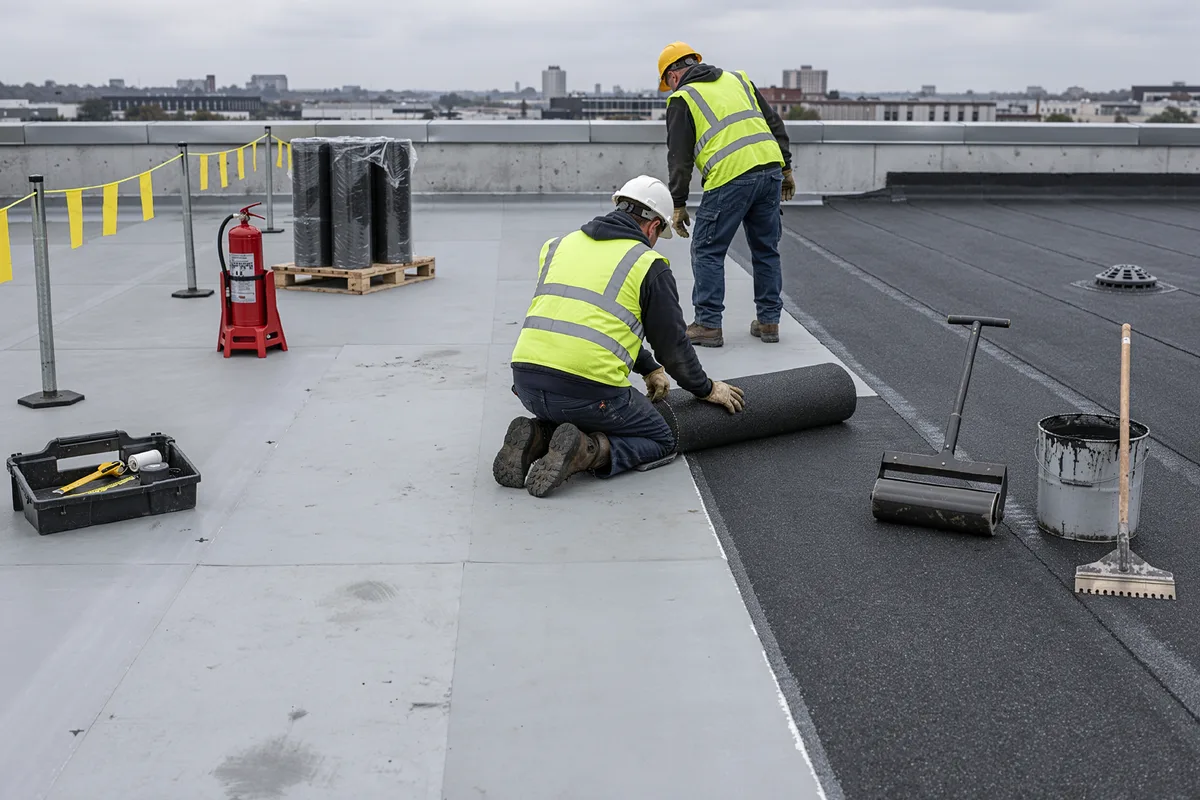
Torch-down roofing is modified bitumen sheet that a roofer bonds to the roof by heating the underside with a propane torch. It is built in layers, with a cap sheet on top. Call the number on this page to be connected with a local roofing contractor in Stanwood.
A material built from separate parts
The membrane, the flashings at walls, the metal edge and the drains all matter on a torch-down roof. A leak can come from any of them. The surface may look fine while the weakness hides where the sheet turns up a wall. Ask the roofer to check each one.
Preparing the property for torch work
Owners can help by moving vehicles, patio furniture and stored items away from the building and clearing the area below. Tell the roofer about attic access, gas meters or anything unusual nearby. The roofer takes it from there. Keep children and pets indoors while work is under way.
Wind off the water and salt air work on edge metal and flashings, so roofers watch the perimeter closely on shoreline torch-down roofs.
How torch-down roofs fail
Common failures include open laps, blisters, granule loss, cracks at flashings and splits across the surface. Water that sits in low spots speeds each one. Most develop gradually, which is why small signs deserve a look before they become interior leaks. Early repairs are usually smaller jobs.
Recover or tear off?
A new cap sheet can sometimes go over sound existing layers, saving time and disposal. If the old roof is wet, blistered throughout or too thick, the roofer may strip it to the deck. Expect that choice to move the estimate. Disposal and deck repair are usually listed separately.
Questions about warranties
Manufacturers offer warranties on materials, and some require specific installation methods. Ask what applies to your roof, what the warranty covers and what could void it. Keep the paperwork with your home records. Keep a copy with your home records, with the date and the roofer's name.
Before you call in Stanwood
For permit questions on a reroof, start with the City of Stanwood permit office. A contractor who works here regularly will know whether your job needs anything filed.
A quick check that pays off: enter the contractor's name in L&I's online verify tool to confirm an active Washington registration.
Homes near the water around Stanwood take more wind and salt exposure, which wears metal flashing and fasteners faster.
Most roof trouble in this part of Washington shows up in the wet season, when a small gap in flashing or a lifted shingle has months of rain to work on.
Electric service here comes from Snohomish PUD (outages: 425-783-1001). Keep away from any line touching the house or a fallen tree.
Because Stanwood is farther from the core of the metro, scheduling can take a little longer and some companies add a trip charge; ask when you call.
Contractors that take calls here usually also work in Marysville, Camano Island and Langley.
Torch-Down Roofing questions in Stanwood
What are cap sheets?
Can torch-down be installed in rain?
What should I do if I smell smoke during roofing work?
How do I check a roofer is registered in Washington?
More roofing services in Stanwood
Torch-Down Roofing nearby
Helpful guides
Sources
Last updated: