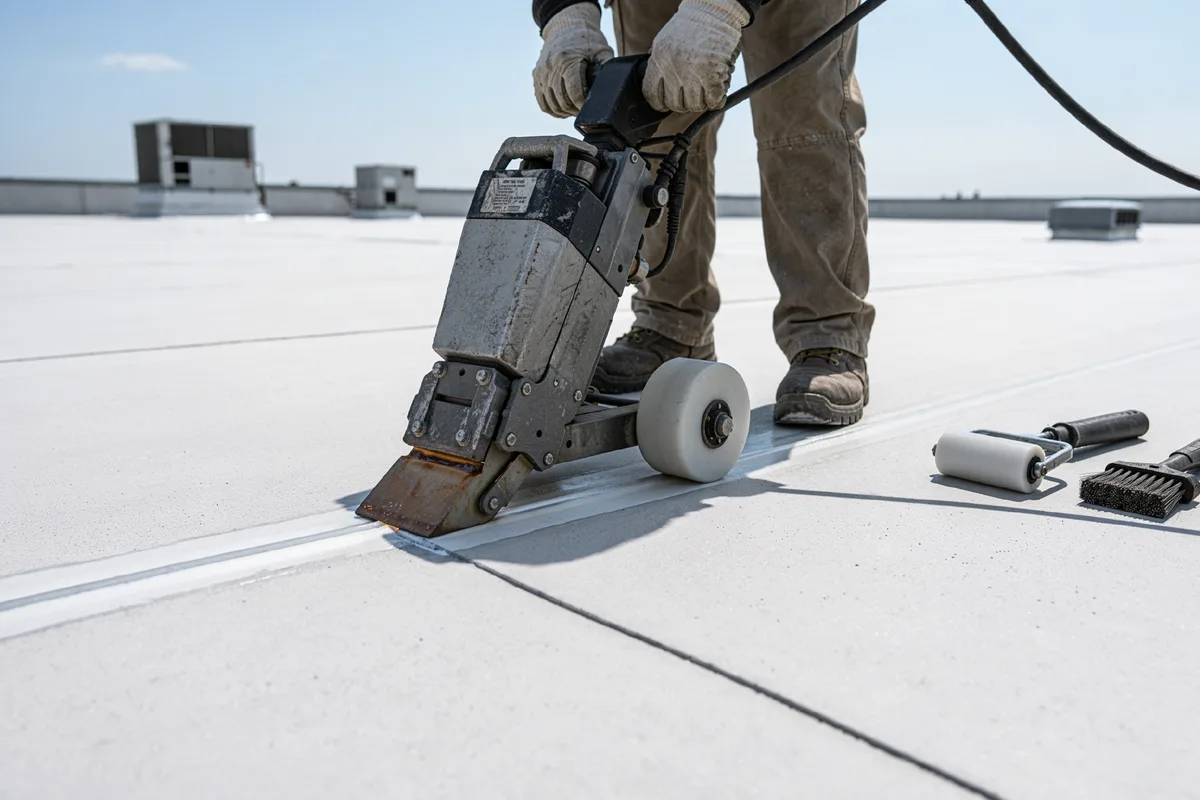
TPO is a single-ply membrane made from thermoplastic polyolefin, usually white, with seams that a roofer welds together with hot air. It is rolled across the roof in wide sheets. Call the number on this page to be connected with a local roofing contractor in Stanwood.
What a TPO roof is
TPO is a thermoplastic single-ply membrane supplied in wide rolls, most often white or light gray. A roofer lays it over insulation and welds the overlaps with hot air, so the seams become part of the sheet rather than a glued joint. Most residential jobs use the same basic method.
Cleaning matters before a weld
Hot-air welding works only on clean, dry membrane. Dust, pollen, tree sap and old residue prevent the surfaces from fusing. A roofer scrubs the area and lets it dry. Skipping this step is a typical cause of failed patches. Ask whether every seam is cleaned before welding.
Wind off the water pulls hard at the edges of a single-ply roof, so shoreline buildings often need extra fasteners and strong edge metal.
Seasonal scheduling
TPO needs a dry, clean surface, and rain or cold can delay work. Many roofers book summer jobs early. Wet seasons can mean waiting for a dry window or using a temporary cover, so ask about timing. Ask when a dry window is expected and what protects the roof meanwhile.
Rooftop equipment and walkways
Air handlers, vents and antennas create foot traffic and extra penetrations. Walkway pads protect the membrane where crews walk. Each penetration is a flashing detail the roofer must weld, so more equipment means more attention. Ask the roofer to mark walkways clearly so service visits do not scar the roof surface.
Planning a TPO job around tenants
Where people live or work below, ask about noise, hours, parking and safety zones. A good roofer explains the sequence and gives notice when areas will be affected. Managers can share the plan with residents. Ask for the plan in writing and share it with residents.
Roof notes for Stanwood
Building permits for Stanwood homes are handled by the City of Stanwood permit office. Small repairs often need nothing, while a tear-off, new sheathing or structural work usually does, so ask the roofer who pulls the permit.
Before work begins, look the company up on L&I's Verify a Contractor page. Washington requires construction contractors, roofers included, to be registered.
Homes near the water around Stanwood take more wind and salt exposure, which wears metal flashing and fasteners faster.
Months of steady rain, shaded roofs and mild temperatures make moss and debris a constant here. Gentle removal is better for shingles than a pressure washer.
Storm took out power too? Report it to Snohomish PUD at 425-783-1001, and stay clear of any downed line.
Because Stanwood is farther from the core of the metro, scheduling can take a little longer and some companies add a trip charge; ask when you call.
Contractors that take calls here usually also work in Marysville, Camano Island and Langley.
TPO Roofing questions in Stanwood
How are TPO seams sealed?
Can TPO go over an old roof?
How does a TPO roof handle foot traffic?
How do I check a roofer is registered in Washington?
More roofing services in Stanwood
TPO Roofing nearby
Helpful guides
Sources
Last updated: