Cedar shakes can often be repaired when the damage is limited to a few split or missing pieces, but widespread rot or soft spots usually point toward replacement. A roofer has to look at the underlayment and the boards below, not just the surface. Call the number on this page to be connected with a local roofing contractor in Bainbridge Island.
Questions to ask yourself first
- Are shakes loose, missing or split in more than one spot?
- Does the roof stay damp in shade?
- Have ceilings or attic boards stained?
Yes to two or more means a roofer should take a look. A roofer can say whether repair makes sense and how soon.
Why cedar roofs struggle in a wet climate
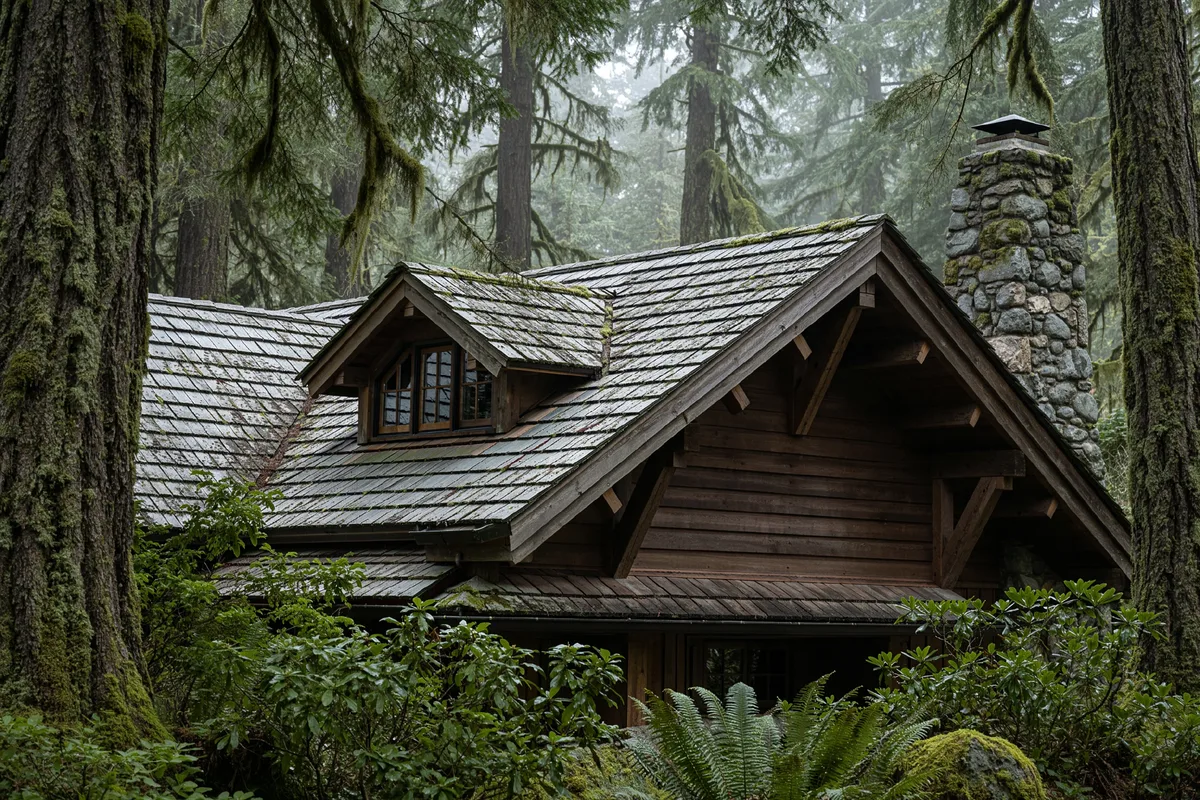
Long seasons of rain keep wood shakes damp for months, and shaded north slopes rarely dry out. Moss then takes hold, trapping moisture against the grain. Over time the surface softens, splits open and starts to shed water poorly. Shade makes the whole process faster.
Tall firs and cedars around many homes here drop needles into valleys and shade the roof, which keeps shakes damp and encourages moss, rot and limb damage in windstorms.
Wind and damp salt air off the water can speed corrosion on shake nails and flashing, and exposed bluffs take the brunt of fall storms.
Hidden costs under the shakes
The visible surface is only part of the story. Rotted spacing boards, failed underlayment or damaged decking can add substantially to a job once the shakes come off. Ask the roofer how they handle surprises and how they will communicate them. Neither is rare on aging cedar roofs.
When a patch is reasonable
Replacing a handful of damaged shakes works when the rest of the slope is firm and the underlayment is intact. If new shakes would sit next to crumbling neighbors, a patch will not hold long, and the roofer may suggest replacing a larger section instead.
Keep a record
Date your photos and keep any receipts for temporary measures. If the damage came from a storm, insurance may be involved, and good records help. Ask the roofer what they will document and what written scope they provide for the work. Keep paperwork together for any adjuster.
Before you call in Bainbridge Island
Building permits for Bainbridge Island homes are handled by the City of Bainbridge Island permit office. Small repairs often need nothing, while a tear-off, new sheathing or structural work usually does, so ask the roofer who pulls the permit.
A quick check that pays off: enter the contractor's name in L&I's online verify tool to confirm an active Washington registration.
Island homes like those in Bainbridge Island face open-water wind and salt air, and a roofer's travel by ferry or bridge can affect scheduling, so ask about timing when you call.
Months of steady rain, shaded roofs and mild temperatures make moss and debris a constant here. Gentle removal is better for shingles than a pressure washer.
Tall evergreens around Bainbridge Island drop needles that fill valleys and gutters and keep roofs shaded and damp, which is where moss starts.
Contractors that take calls here usually also work in Suquamish, Indianola and Silverdale.
Cedar Shake Roofing questions in Bainbridge Island
Is a cedar roof a fire risk?
What does a roofer look at on a shake roof?
Will new shakes match my old roof?
Can I do small repairs myself?
More roofing services in Bainbridge Island
Cedar Shake Roofing nearby
Helpful guides
Sources
Last updated: