In a wet climate the shingle matters less than what is under it: drip edge, quality underlayment, sealed valleys and proper ventilation. A roofer can explain which layers your roof needs. Call the number on this page to be connected with a local roofing contractor in Indianola.
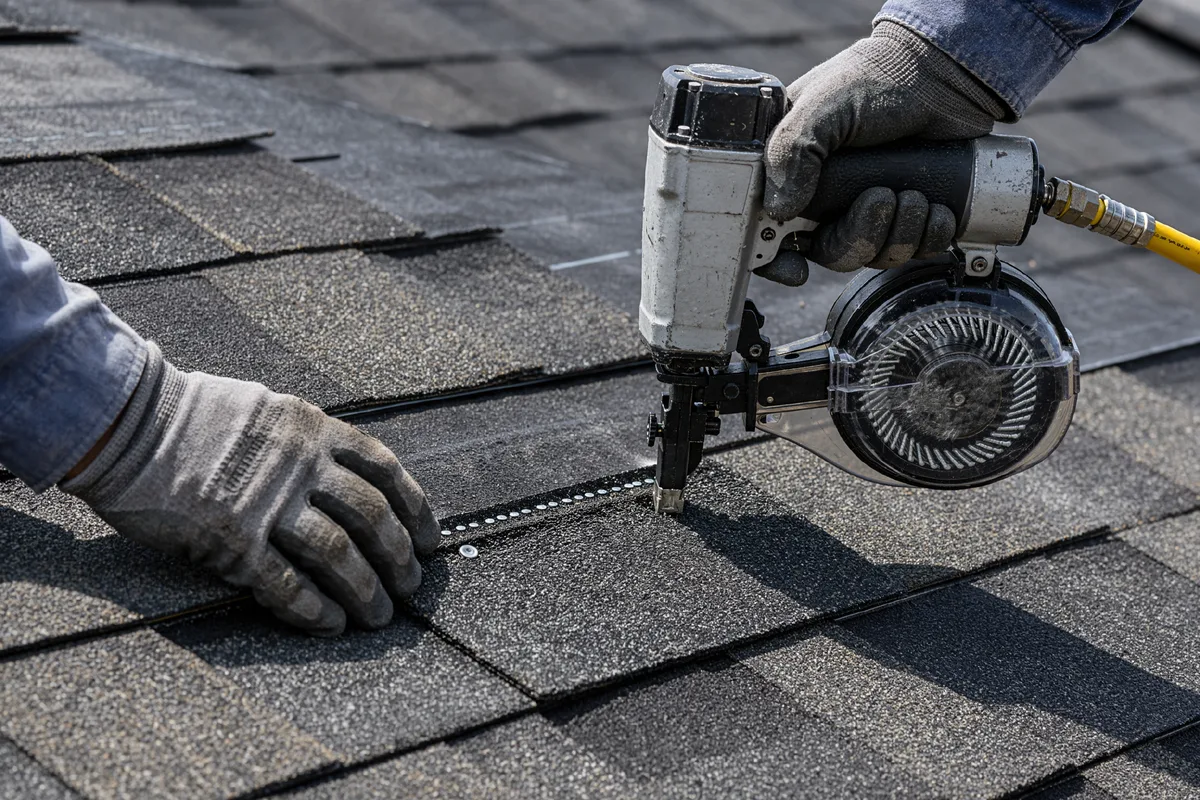
What is in a shingle
- A fiberglass mat as the base
- Asphalt coating for waterproofing
- Mineral granules that shield from sun
- A sealant strip that bonds each course
Thicker mats and heavier granule coverage usually mean a sturdier product. Ask which mat weight and granule coverage the quoted product uses.
Decking quality sets the base
Shingles need solid, flat sheathing to nail into and to lie smooth. Gaps, warps or soft spots telegraph through the surface and weaken fastener grip. A roofer checks the deck before laying new material and flags boards that need attention. Replacing bad boards costs less than redoing shingles.
Shaded roofs under firs and cedars stay damp, so algae-resistant shingles, open valleys and trimmed branches help asphalt shingles last longer.
Shoreline wind and salt air test shingles and fasteners, so ask for higher wind-rated products and corrosion-resistant nails and flashing near the water.
Ridge vents and attic airflow
A ridge vent runs along the peak and lets warm, damp air escape while soffit intake brings cooler air in. Balanced airflow limits condensation under the sheathing, which matters in a wet climate where attics can stay humid for months. Matching the vent type to the attic keeps the layout simple.
Warranty tiers explained
Shingle makers publish material warranties, and some offer extended versions that require a particular system of accessories and installation by a qualified contractor. Ask what applies to your product, what voids it and whether the roofer will register it for you. Ask for the paperwork in advance of signing.
Local details for Indianola
On permits, the Kitsap DCD says: roofing permit required for residential if it includes structural work or more than 2,100 square feet of roofing materials are being replaced; always required for commercial.
Washington L&I registers construction contractors. Its free lookup shows whether a roofer's registration is active and whether there are claims against it.
Homes near the water around Indianola take more wind and salt exposure, which wears metal flashing and fasteners faster.
Months of steady rain, shaded roofs and mild temperatures make moss and debris a constant here. Gentle removal is better for shingles than a pressure washer.
Tall evergreens around Indianola drop needles that fill valleys and gutters and keep roofs shaded and damp, which is where moss starts.
Electric service here comes from PSE (outages: 888-225-5773). Keep away from any line touching the house or a fallen tree.
Contractors that take calls here usually also work in Bainbridge Island, Kingston and Suquamish.
Wind and blow-offs
Strong south winds lift unsealed or poorly nailed shingles, and tabs may crease or tear away. After a blow, check from the ground for missing pieces, then ask a roofer to inspect. A few repairs now can prevent water getting under neighboring shingles. Look for pieces on the lawn, too.
Asphalt Shingle Roofing questions in Indianola
What is the difference between architectural and three-tab shingles?
What is the best underlayment under asphalt shingles?
What are algae-resistant shingles?
What shingle works near salt water?
More roofing services in Indianola
Asphalt Shingle Roofing nearby
Helpful guides
Sources
Last updated: