A torch-down roof commonly shows its age through lost granules, open laps, blisters and cracks at flashings. A roofer can tell whether a repair or a new cap sheet makes sense. Call the number on this page to be connected with a local roofing contractor in Indianola.
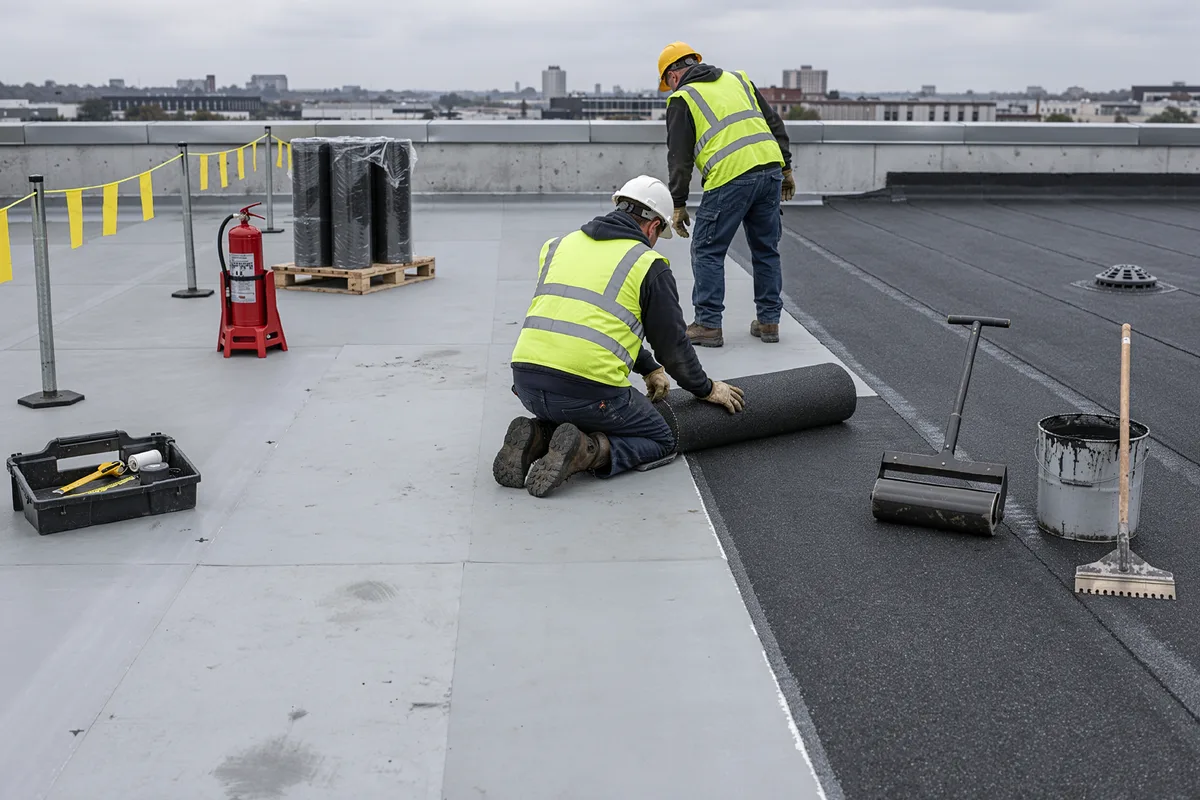
Where it shows up on local buildings
- Flat porch and carport roofs
- Additions and dormer tops
- Condo and apartment decks
- Small commercial and mixed-use buildings
It suits any roof too flat for shingles to shed water reliably. The material also repairs well when a section wears out, so one failed spot rarely means starting over.
Fire safety in a wet-weather region
Damp days may seem to lower the risk, but hidden gaps and dry attic framing still burn. Roofers may delay torch work in wind or on a wet surface for safety and for a good bond. Expect schedule changes. Ask what the roofer does when the forecast changes mid-job.
Tall firs and cedars drop needles and limbs onto low roofs here, so cap sheets get scuffed and drains clog more often.
Wind off the water and salt air work on edge metal and flashings, so roofers watch the perimeter closely on shoreline torch-down roofs.
Where the sheet meets walls and curbs
Flashings turn the membrane up walls, around pipes and over curbs. They get the most stress and the most hand work. If the leak is near a wall or a vent, a roofer will look there first. Wrinkles or cracks in these areas are worth showing the roofer.
Scheduling around rain
Torch-applied membranes need a dry surface and calm conditions. Rainy weeks can push a start date back, and the schedule may shift after work begins. Ask how the roofer handles weather delays and temporary protection. Plan around possible delays, and ask what protects the roof between visits.
Local details for Indianola
On permits, the Kitsap DCD says: roofing permit required for residential if it includes structural work or more than 2,100 square feet of roofing materials are being replaced; always required for commercial.
Washington requires roofing contractors to register with the Department of Labor & Industries. L&I's Verify a Contractor tool shows a company's registration status before you sign anything.
Homes near the water around Indianola take more wind and salt exposure, which wears metal flashing and fasteners faster.
Months of steady rain, shaded roofs and mild temperatures make moss and debris a constant here. Gentle removal is better for shingles than a pressure washer.
Tall evergreens around Indianola drop needles that fill valleys and gutters and keep roofs shaded and damp, which is where moss starts.
Storm took out power too? Report it to PSE at 888-225-5773, and stay clear of any downed line.
Contractors that take calls here usually also work in Bainbridge Island, Kingston and Suquamish.
Questions about warranties
Manufacturers offer warranties on materials, and some require specific installation methods. Ask what applies to your roof, what the warranty covers and what could void it. Keep the paperwork with your home records. Keep a copy with your home records, with the date and the roofer's name.
Torch-Down Roofing questions in Indianola
What are cap sheets?
Does torch-down roofing need a permit?
Can I put a coating over a torch-down roof?
How do I check a roofer is registered in Washington?
More roofing services in Indianola
Torch-Down Roofing nearby
Helpful guides
Sources
Last updated: