Owners and managers should ask for the roofer's registration, a written scope, photos of the problem areas and how tenants will be protected. Call the number on this page to be connected with a local roofing contractor in Indianola.
Warehouses and larger footprints
Big roofs cover big areas, and small leaks can travel far across a deck. Roofers use moisture scans, drain maps and sections to isolate problems. Forklift traffic and stored goods below make planning even more important. Ask how the crew will protect stored goods and keep forklift lanes clear.
Working in occupied spaces
Falling debris, dust and fastener noise can reach interior areas. Roofers may protect ceilings, cover equipment and set up safe walkways. Managers should flag sensitive areas such as server rooms, clinics or food prep before work begins. Ask the roofer how interior protection will be handled in each of these areas.
Buildings in unincorporated areas may follow different county permit routes, so ask the roofer which office handles the reroof and what it requires.
Marina, harbor and waterfront buildings face constant moisture and strong gusts, which test membrane edges, seams and rooftop equipment curbs year after year.
Permits and approvals
Many reroofing projects need a building permit, and some jurisdictions have rules on insulation or energy performance. Associations and landlords may need board or owner approval. A roofer or the local permit office can explain what applies. Ask the roofer who applies for the permit and who pays for it.
Single-ply and modified bitumen
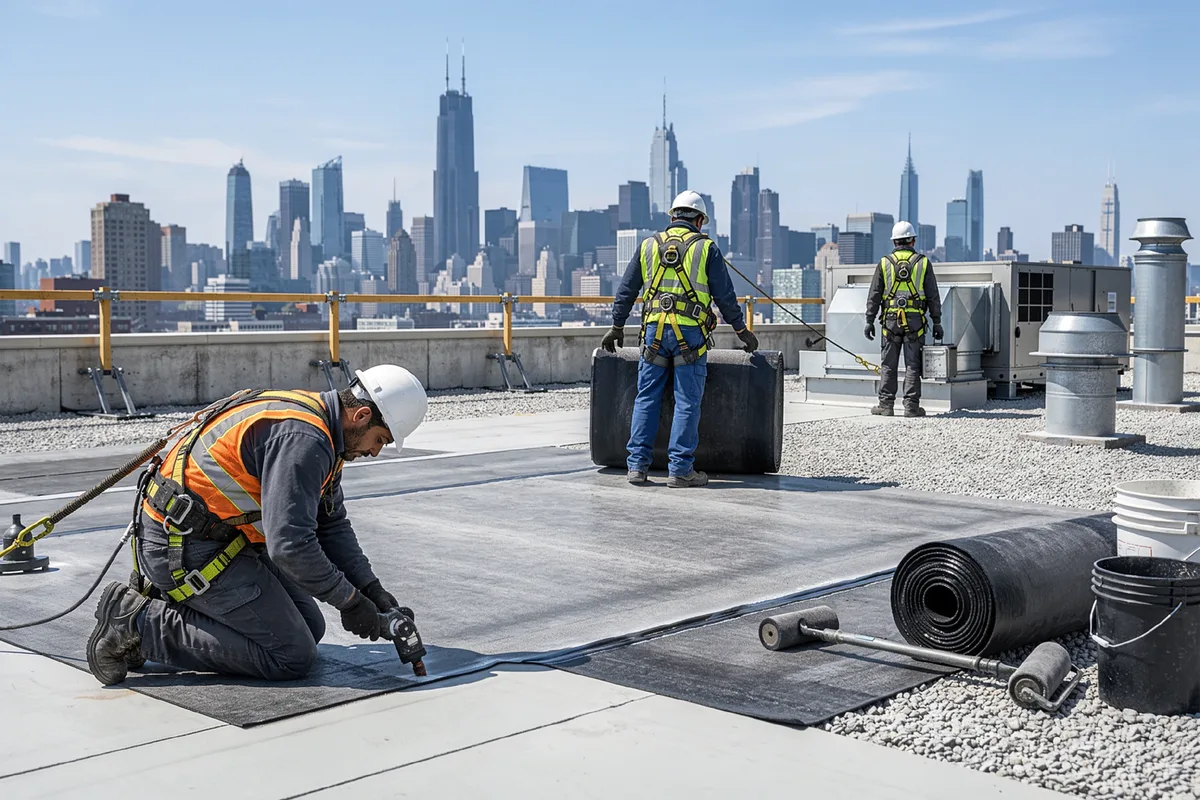
These are the usual choices for new commercial flat roofs. Single-ply is welded at the seams, and modified bitumen is layered and fused. A roofer explains which suits the building, the budget and the safety limits at your site. Ask the roofer to explain why each system was chosen.
Useful local facts for Indianola
Reroof permits for Indianola addresses go through the Kitsap DCD. Its published rule: roofing permit required for residential if it includes structural work or more than 2,100 square feet of roofing materials are being replaced; always required for commercial.
Washington requires roofing contractors to register with the Department of Labor & Industries. L&I's Verify a Contractor tool shows a company's registration status before you sign anything.
Homes near the water around Indianola take more wind and salt exposure, which wears metal flashing and fasteners faster.
Fall and winter windstorms are the main source of sudden roof damage around Puget Sound. Lifted tabs and loose ridge caps are worth a look after a blow.
With big firs and cedars close to many homes in Indianola, falling limbs during windstorms are a real roof risk. Trimming overhanging branches helps.
Nearby, the same kind of help is available in Bainbridge Island, Kingston and Suquamish.
Emergency steps managers can take
- Keep everyone clear of sagging ceiling tiles
- Shut off power to wet areas if safe
- Photograph damage with dates
- Contain water and notify tenants
Leave all roof access to roofers. Ask the roofer for help with temporary protection, and tell the roofer about any electrical or inventory risks.
Commercial Roofing questions in Indianola
Can a commercial roof be repaired instead of replaced?
Does a commercial reroof need a permit?
How do I compare commercial roofing bids?
How do I check a roofer is registered in Washington?
More roofing services in Indianola
Commercial Roofing nearby
Helpful guides
Sources
Last updated: