TPO is a single-ply membrane made from thermoplastic polyolefin, usually white, with seams that a roofer welds together with hot air. It is rolled across the roof in wide sheets. Call the number on this page to be connected with a local roofing contractor in SeaTac.
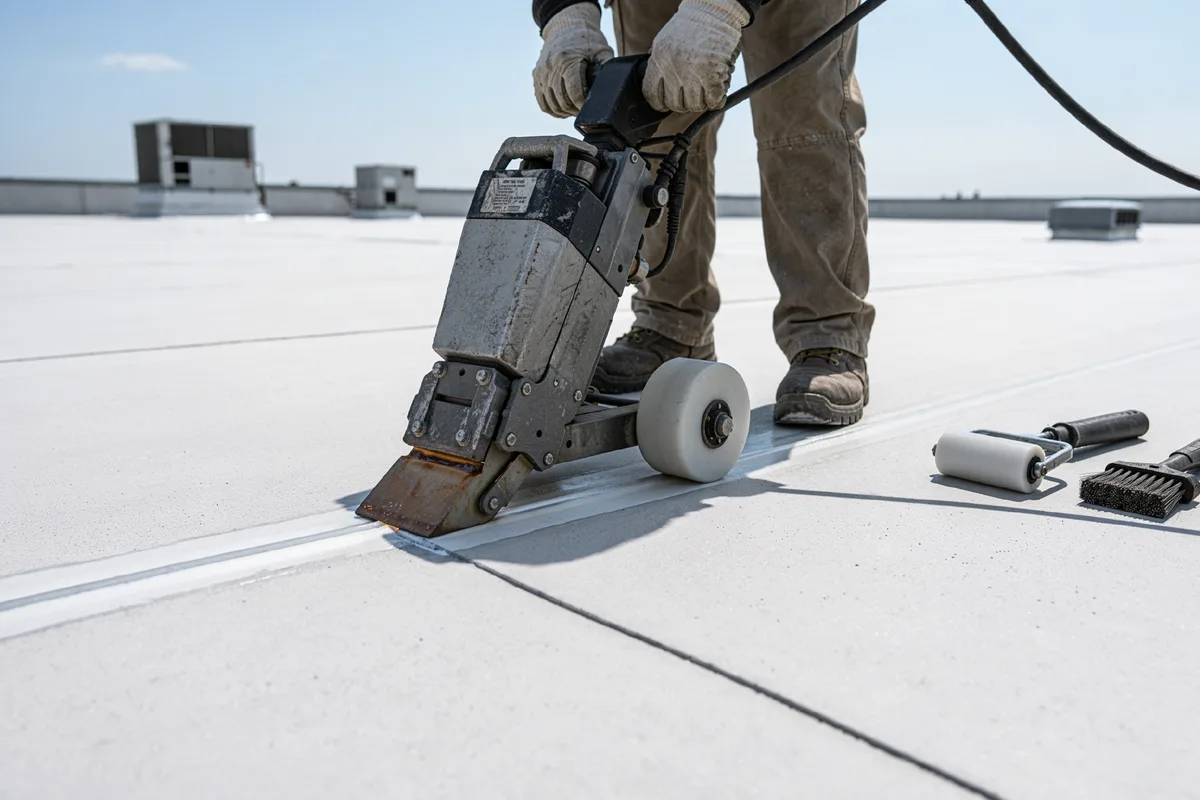
Types of TPO in the field
Membranes come in different thicknesses, reinforced with fabric or polyester scrim. Thicker sheets resist punctures and foot traffic better. A roofer can explain which version suits a roof that sees heavy use or lots of falling debris. Ask which thickness the roofer recommends and why it suits your building.
Common seam problems
- Cold welds that never fully fused
- Burned or wrinkled seam edges
- Dirt or moisture trapped in the overlap
- Unsealed cut edges on reinforced sheets
Any of these can open over time and let water in. A careful roofer rechecks seams, since small flaws are easy to fix before leaving.
Seasonal scheduling
TPO needs a dry, clean surface, and rain or cold can delay work. Many roofers book summer jobs early. Wet seasons can mean waiting for a dry window or using a temporary cover, so ask about timing. Ask when a dry window is expected and what protects the roof meanwhile.
Before you call in SeaTac
If the job grows from a patch into a full reroof or framing repair, check with the City of SeaTac permit office before work starts.
Before work begins, look the company up on L&I's Verify a Contractor page. Washington requires construction contractors, roofers included, to be registered.
Most roof trouble in this part of Washington shows up in the wet season, when a small gap in flashing or a lifted shingle has months of rain to work on.
If a tree has brought down a power line onto the roof, stay well away and call 911 first.
Write down when the leak appears: every rain, only in wind-driven rain, or only after snow. That detail points straight to the cause.
Calls from SeaTac are often matched with roofers who also cover Tukwila, Burien and Des Moines.
Homes, additions and small buildings
On houses, TPO often covers a flat addition, porch roof or modern low-slope design. Neighbors and associations may care about the look. A roofer can show color options and explain how the roof ties into shingles above. Ask which options the roofer has installed on similar homes recently.
If a TPO roof is leaking now
Stay off the roof. Set a bucket under the drip, move belongings, photograph the stain and tell the roofer when it began. If water reaches light fixtures or outlets, shut off power to that area and keep clear. Take photos if you can do so safely.
TPO Roofing questions in SeaTac
What does TPO stand for?
How are TPO seams sealed?
Does TPO need a permit?
How do I check a roofer is registered in Washington?
More roofing services in SeaTac
TPO Roofing nearby
Helpful guides
Sources
Last updated: