Most commercial jobs start with a roof walk and a condition report that records seams, drains, flashings and wet areas. That report supports a repair, coating or replacement decision. Call the number on this page to be connected with a local roofing contractor in Suquamish.
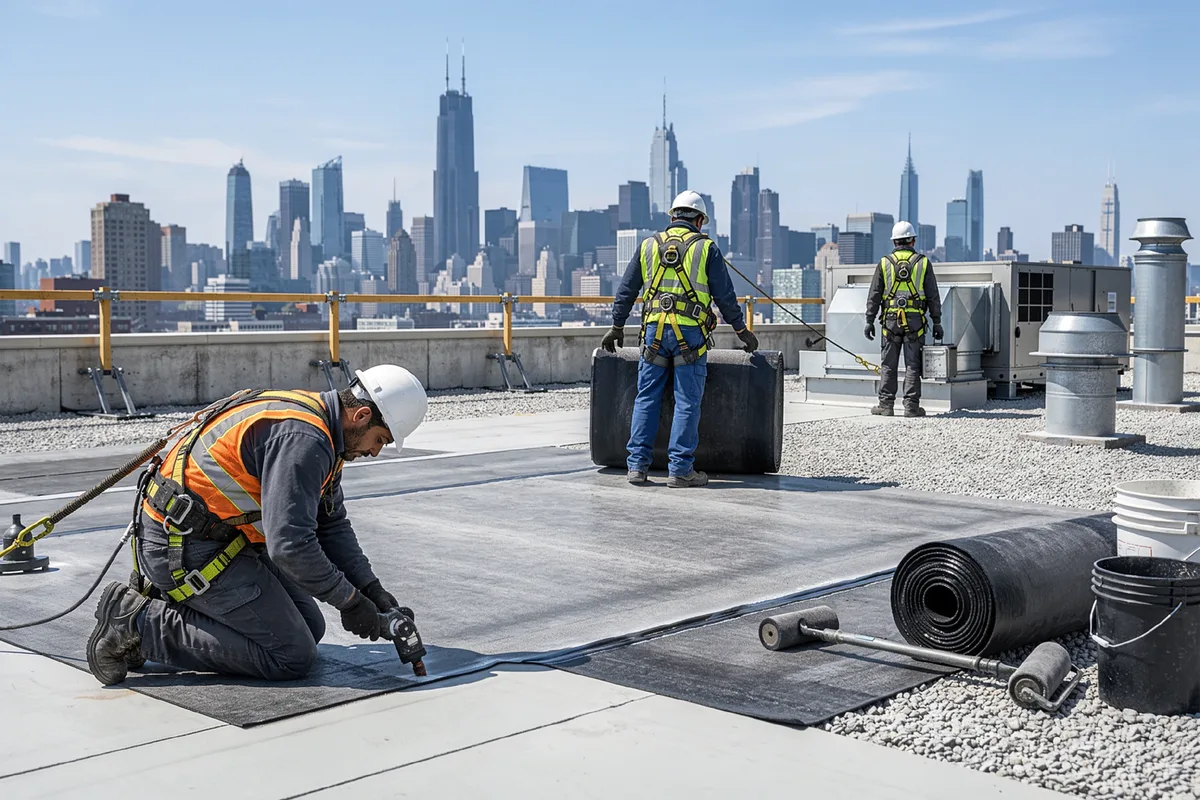
How commercial differs from residential
The roofs are larger, flatter and more tied to drains and building systems. Paperwork, schedules and warranties carry more weight, and several people may approve the work. The core need is the same: keep water out. Ask the roofer to explain how the process will work for your building.
Scheduling around tenants
Roofers plan noise, parking, access and roof hours with the manager before work starts. Loud steps may be moved to quieter times. A written schedule with notice to tenants prevents complaints and keeps the project from stalling. Ask the roofer to put the plan in writing and share it with the manager.
Buildings in unincorporated areas may follow different county permit routes, so ask the roofer which office handles the reroof and what it requires.
Marina, harbor and waterfront buildings face constant moisture and strong gusts, which test membrane edges, seams and rooftop equipment curbs year after year.
Repair, coat or replace
Localized leaks on a sound roof call for repair. A dry but worn roof may suit a coating. Wet insulation and widespread failure point toward replacement. A condition report helps managers choose among the three based on evidence, not guesses. Ask the roofer to show the evidence behind each recommendation.
Before you call in Suquamish
Reroof permits for Suquamish addresses go through the Kitsap DCD. Its published rule: roofing permit required for residential if it includes structural work or more than 2,100 square feet of roofing materials are being replaced; always required for commercial.
Washington requires roofing contractors to register with the Department of Labor & Industries. L&I's Verify a Contractor tool shows a company's registration status before you sign anything.
Homes near the water around Suquamish take more wind and salt exposure, which wears metal flashing and fasteners faster.
Months of steady rain, shaded roofs and mild temperatures make moss and debris a constant here. Gentle removal is better for shingles than a pressure washer.
With big firs and cedars close to many homes in Suquamish, falling limbs during windstorms are a real roof risk. Trimming overhanging branches helps.
Nearby, the same kind of help is available in Silverdale, Poulsbo and Indianola.
The roof condition report
A report records the roof type, age, drains, seams, flashings, ponding, equipment and any wet areas, with photos and a map. It becomes the basis for budgeting and bids. Ask the roofer what the report will include and how soon you can expect it. Ask for sample reports.
When a leak hits occupied space
Protect people, inventory and equipment first. Move items, cover shelves, set out buckets and keep staff away from wet ceilings and electrical areas. Then call a roofer and describe where and when the water appeared. Ask how quickly a leak can be assessed and temporarily patched.
Commercial Roofing questions in Suquamish
How do roofers schedule work around tenants?
Does a commercial reroof need a permit?
Can roofing continue while the building is open?
What is a maintenance program for a commercial roof?
More roofing services in Suquamish
Commercial Roofing nearby
Helpful guides
Sources
Last updated: